


Linear motors are changing industries with speed and precision. Unlike traditional motors, they provide direct, straight-line motion. This eliminates the need for gears. In this article, we’ll explore how linear motors work. We’ll discuss their types and applications. Learn how they’re transforming automation and manufacturing.
A linear motor is an electromechanical device that converts electrical energy into linear motion. Unlike traditional rotary motors, which require mechanical components like gears and belts to convert rotational motion into linear displacement, linear motors achieve straight-line motion directly. By "unrolling" the design of a rotary motor, the stator and the forcer work together to produce the linear thrust needed for various applications. This direct drive system significantly enhances performance by eliminating mechanical losses and minimizing maintenance.
1. Stator: The stationary part of the motor that generates a traveling magnetic field. This field powers the forcer to move in a linear direction.
2. Forcer: The moving part of the motor, which reacts to the magnetic field produced by the stator. It is responsible for the actual motion along the linear path.
3. Linear Guide: Used to keep the forcer moving along the intended track, ensuring smooth and precise motion.
4. Feedback System (Encoder): A sensor that tracks the position of the forcer and provides real-time feedback, ensuring high precision and accuracy.
Component | Function |
Stator | Generates the traveling magnetic field to power the forcer along the linear track. |
Forcer | The moving part that reacts to the magnetic field and performs the actual movement along the linear path. |
Linear Guide | Provides mechanical support and ensures precise alignment of the forcer to prevent instability during high-speed operations. |
Feedback System | A sensor (encoder) that continuously tracks the position of the forcer, ensuring precise control and high accuracy during operation. |
Linear motors operate on the same principle as traditional rotary motors, which is the electromagnetic force, specifically the Lorentz force. When electric current flows through the stator coils, it creates a magnetic field that interacts with the permanent magnets in the forcer. This interaction produces a force that moves the forcer in a straight line. Unlike rotary motors, linear motors do not require gears or belts to convert motion, resulting in faster and more precise movements.
In a linear motor, the rotating magnetic field of a traditional motor is "unrolled" to produce a linear force. As current flows through the stator, it creates a traveling magnetic field that directly pulls or pushes the forcer along the linear path. This simplified design eliminates the need for mechanical parts like gears, offering smoother, faster, and more reliable motion. The result is a frictionless and maintenance-free system that operates efficiently in demanding environments.
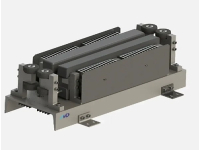
Iron-core linear motors are widely used for heavy-duty applications where high force and continuous motion are essential. These motors have copper windings wrapped around laminated iron cores. The interaction between the stator’s electromagnetic field and the permanent magnets on the track produces strong thrust, which moves the forcer. These motors are ideal for applications like CNC machines and plastic injection systems, where high power and durability are required. The non-contact, frictionless design ensures efficient operation with minimal maintenance.
Ironless motors are designed for applications where smooth, frictionless motion is critical. In these motors, there is no ferromagnetic material in the moving part. Instead, coils "float" between two magnetic tracks. This design reduces mechanical losses and eliminates cogging, making them ideal for applications in cleanrooms, semiconductor fabrication, medical devices, and optical inspection systems. Their low moving mass and high precision enable them to achieve rapid acceleration and deceleration, crucial for high-speed applications.
Tubular linear motors feature a cylindrical design, with a rod containing permanent magnets inside a coil assembly. This design ensures uniform force application in all directions, improving mechanical balance and reducing side loads. Tubular motors are compact and efficient, making them suitable for space-constrained environments like robotics, medical pumps, and fast packaging systems. Their energy-efficient operation, along with the ability to deliver high thrust, makes them a powerful solution in many automated applications.
Ironless vacuum linear motors are designed for ultra-clean and high-vacuum environments. These motors operate without any mechanical contact between parts, ensuring smooth, frictionless motion, even in harsh conditions. With the ability to withstand temperatures as low as -30°C and as high as 45°C, these motors are used in applications such as semiconductor wafer handling, vacuum chambers, and particle accelerators. Their non-contact design ensures that they operate without contaminating sensitive environments, making them perfect for high-precision tasks in scientific and industrial settings.
Specification | Value |
Nominal Input Voltage | 380V-400V |
Nominal Input Frequency | 50/60Hz |
Nominal Thrust Force | 200N |
Maximum Thrust Force | 400N |
Nominal Current | 2A |
Maximum Current | 4A |
Speed Range | 0.8-3 m/s |
Installation Air Gap | 6mm-10mm |
Insulation Grade | F |
Degree of Protection | IP65 |
Ambient Temperature | -30°C to 45°C |
In the semiconductor industry, even the smallest vibration can damage a microchip. Ironless linear motors, known for their smooth and cog-free motion, are ideal for applications in semiconductor fabrication. These motors provide precise control over the movement of silicon wafers, reducing the risk of particle contamination and ensuring the cleanliness required in cleanroom environments. Their frictionless operation also reduces mechanical wear and tear, leading to fewer maintenance requirements and longer motor life.
Linear motors are also used in high-speed packaging systems, where speed and precision are critical. These motors enable pick-and-place systems, cutters, and packaging heads to move quickly and accurately along production lines. With their high-speed capabilities and precision, linear motors help improve throughput while maintaining the accuracy needed to align products for packaging. The non-contact design of these motors reduces noise and mechanical wear, further enhancing their suitability for fast-paced production environments.
In medical imaging systems like MRI machines, linear motors are used to move imaging tables and gantries with precision and minimal vibration. Their frictionless operation ensures that they produce no mechanical noise, which is important for patient comfort. Furthermore, the maintenance-free design of these motors eliminates the need for regular servicing, making them ideal for sensitive medical environments where uptime and precision are paramount.
Linear motors are crucial in automated inspection systems, where precise, repeatable motion is required for quality control. Feedback-controlled linear motors enable sensors and cameras to move with micron-level precision, allowing for accurate measurements in industries like aerospace, electronics, and precision optics. The high-speed and accuracy of linear motors ensure that inspection processes are carried out efficiently, improving product quality and consistency.
Linear motors excel at delivering high-speed and high-precision movement. Unlike traditional motors, which use gears or belts to convert rotational motion into linear motion, linear motors provide direct drive, ensuring smoother and more reliable performance. This direct drive system is ideal for applications where both speed and precision are critical.
One of the key advantages of linear motors is their maintenance-free operation. Because there are no mechanical components like gears or belts, linear motors experience minimal wear and tear. This frictionless design leads to reduced maintenance costs and increased operational efficiency. The longevity of linear motors makes them a cost-effective choice for high-performance applications.
Linear motors are more energy-efficient than traditional motors because they do not rely on mechanical conversions to generate linear motion. Their direct drive system eliminates energy losses typically associated with mechanical components like gears and belts. As a result, linear motors provide faster and more precise motion while consuming less energy, making them an ideal solution for energy-conscious applications.
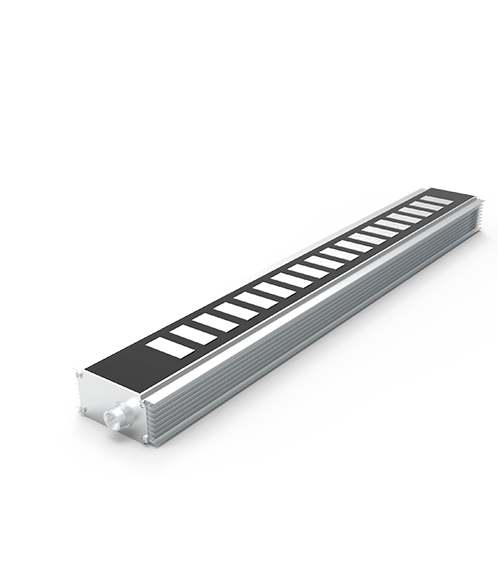
Linear motors are at the heart of maglev transportation systems, which use electromagnetic forces to levitate and propel trains at high speeds. This technology is already in use in several countries, and advancements in linear motor technology will continue to improve the speed, efficiency, and sustainability of maglev trains. The potential for faster, quieter, and more efficient travel is driving further innovation in this field.
Linear motors hold promise for space exploration, particularly in mass drivers that could accelerate spacecraft to escape velocity. These high-acceleration motors could replace traditional rocket propulsion systems, reducing the cost and complexity of space missions. The development of such systems could revolutionize space travel in the coming decades.
As industrial automation continues to evolve, the role of linear motors is becoming more critical. With their ability to provide precise, high-speed motion, linear motors are ideal for robotics, CNC machines, and automated manufacturing systems. Ongoing research and development will continue to expand the applications of linear motors in various industries.
Linear motors are transforming industries with their direct, frictionless drive systems. They offer better speed, precision, and efficiency than traditional motors. Their applications include semiconductor manufacturing, packaging, and medical imaging. As technology advances, linear motors will play a bigger role in automation and high-performance industries. Products from Motor and Drive provide exceptional value with their innovative features, driving efficiency and innovation across various sectors.
A: A linear motor provides direct, straight-line motion, unlike traditional rotary motors. It uses electromagnetic forces to move the forcer along a track, offering frictionless operation.
A: Linear motors offer higher precision, faster speeds, and maintenance-free operation, making them ideal for high-performance applications like semiconductor manufacturing and medical imaging.
A: Linear motors are widely used in automation systems, providing precise motion control in robotics, conveyor systems, and packaging lines, improving efficiency and productivity.
A: No, linear motors are maintenance-free due to their frictionless operation, reducing downtime and repair costs compared to traditional motors with mechanical components.


 English