
Views: 226 Author: Site Editor Publish Time: 2026-01-12 Origin: Site


Motorized rollers are no longer a niche component — they are the backbone of modern conveyors, parcel sorters, packaging lines, and automated distribution systems. Choosing motorized rollers affects capital expense (CapEx) and ongoing operating expense (OpEx). Too often buyers focus only on the sticker price per roller and miss the many other cost levers that determine the true total cost of ownership (TCO) over the roller’s life.
This guide walks through every cost category you should budget for — purchase, customization, installation, controls & integration, energy, maintenance, downtime risk, spares, upgrades, compliance, and end-of-life. Show which factors usually dominate budgets, where teams commonly underestimate expenses, and practical ways to reduce lifetime cost without sacrificing performance.
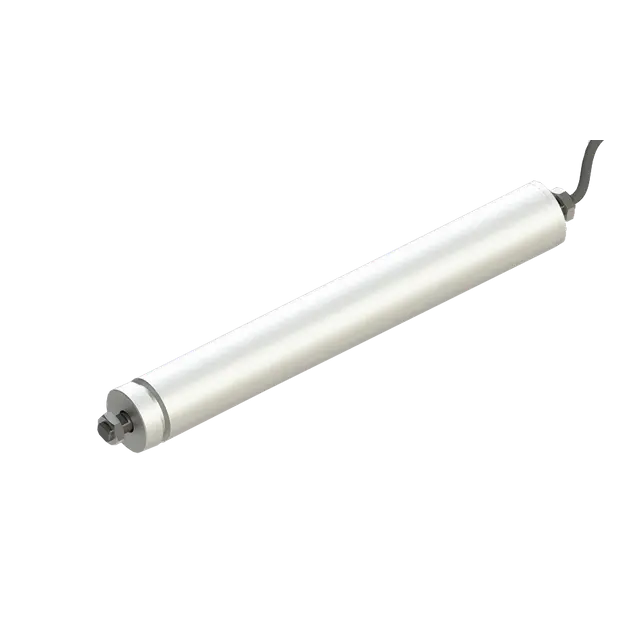
The invoice line “motorized roller: $XXX” covers core components but hides many options. Typical factors that change the unit price:
Diameter & length — longer or larger diameter rollers use more material and stronger bearings.
Material — aluminum is lighter and cheaper; stainless steel (304/316) raises cost for corrosion resistance and food safety.
Motor type — brushless DC, brushed DC, AC induction, or servo. Brushless motors cost more up front but last longer.
Built-in gearbox — helical or planetary gearboxes add cost and change torque characteristics.
Encoders & sensors — add feedback for speed/position control.
IP rating — higher IP (waterproof/dustproof) increases price.
Custom shafts, hollow bore, keyed ends — custom machining costs.
Factory testing & certificates — traceable QC adds cost.
Rule of thumb: Basic low-voltage 24V rollers for light conveyors are the least expensive per unit; high-torque, high-IP, servo-equipped rollers for continuous heavy industry are multiple times more expensive.
Custom rollers (non-standard lengths, exotic coatings, special bearings) increase lead time and unit cost. Procurement risk includes:
Minimum order quantities (MOQs) for special sizes.
Longer lead times for stainless or custom windings.
Import duties and tariffs depending on origin.
Single-vendor dependency if only one supplier can meet specs.
Mitigation: standardize sizes and lock contracts that include spares and lead-time guarantees.
Electronics and integration often eclipse mechanical costs in modern systems. Consider:
Drive electronics / VFDs / motor controllers — cost varies with performance and communications.
Encoder feedback for speed and torque control.
Network interfaces (Ethernet/IP, Profinet, CAN, Modbus).
PLC or WCS/WMS integration — programming, mapping, and testing.
Safety interlocks & diagnostic systems.
Integration labor for control logic, zone accumulation algorithms, and testing is frequently billed as engineering hours and can be a sizeable part of the project budget.
Motorized rollers need power and often data cabling. Costs include:
Power supplies distributed across long conveyors.
Cable trays, conduits, connectors, and grommets.
Specialized multi-pin quick-disconnects for modular replacement.
Electrical panels, breakers, and protection devices.
Long cable runs and EMI/EMC requirements raise costs and require correct planning.
Installation includes mechanical mounting, alignment, balancing, electrical hookup, and commissioning. True costs include:
Skilled labor for alignment and dynamic balancing.
Crane/rigging and scaffolding for large systems.
Commissioning engineers to validate performance under load.
Factory acceptance tests (FAT) and site acceptance tests (SAT).
Commissioning often requires iterative tuning, which consumes engineering hours post-delivery.
Over the life of the roller, energy cost can be substantial. Factors:
Motor efficiency and duty cycle.
Regenerative braking or energy recovery capability.
Load profile (continuous vs intermittent).
Number of rollers and aggregate power draw.
Example concept: a modest reduction in average current draw across thousands of rollers multiplies into measurable annual savings.
Maintenance costs include scheduled inspections, bearing replacements, seal renewals, and occasional motor replacements. Consider:
MTBF / MTTR — mean time between failure and mean time to repair.
Local vs centralized spares — stock critical rollers onsite for rapid swap.
Service contracts — OEM preventive maintenance vs in-house technicians.
Training — technician training costs.
Planned preventive maintenance prevents costly unplanned downtime.
Arguably the largest hidden cost is production loss:
Unplanned roller failure can stop a line — cost equals lost output plus expedited fixes.
Contingency procedures (manual handling, bypass) may add labor but keep lines moving.
Redundancy design (duplicate rollers/zones) increases upfront cost but lowers risk exposure.
When estimating TCO, quantify downtime cost per hour — it often justifies higher-quality rollers.
Meeting industry regulations (food, pharma, automotive) requires additional steps:
Hygienic design (drainable finishes, FDA-approved materials).
Traceability documentation and certificates.
Third-party audits or validation testing.
Budget these compliance costs into project proposals in regulated industries.
Technology changes: communication protocols, control strategies, and motor electronics evolve. Costs to budget:
Future firmware updates or controller swaps.
Retrofit kits for legacy rollers.
Disposal/recycling of old rollers and environmentally compliant handling.
Design for modularity and standard interfaces to reduce future retrofit costs.
Standardize roller lengths and diameters across lines.
Buy modular controllers that can be reused for future projects.
Right-size motors — avoid overspecification.
Negotiate spares with initial purchase (better pricing, shorter lead time).
Design redundancy where downtime is costly instead of overbuilding everywhere.
Train local technicians to reduce vendor service calls.
Monitor energy use and apply VFDs or sleep modes during idle periods.
Yes — in most modern automated operations they are worth it. Their modularity, control precision, lower long-term maintenance, and energy advantages typically outweigh higher upfront and integration costs. Still, do the math: in low-use, low-complexity manual lines, a simpler system may be more economical.
The “true cost” of motorized rollers goes far beyond the purchase invoice. To make a smart decision, quantify purchase, customization, integration, energy, maintenance, downtime, and obsolescence costs over a realistic life span (3–10 years depending on duty). Use a simple TCO template, evaluate downtime risk carefully, standardize where possible, and partner with suppliers who provide service, spares, and integration support.
1. What is the single biggest hidden cost of motorized rollers?
Downtime and lost production from unexpected failures. Design and spares planning usually offer the best ROI to mitigate this.
2. How much of total cost is installation vs operation?
It varies, but installation often represents 20–40% of first-year spend, while operation (energy + maintenance + downtime) can dominate multi-year TCO.
3. Are brushless motors worth the extra purchase cost?
Typically yes for high-duty or continuous systems: better efficiency, longer life, and lower maintenance often offset higher initial cost.
4. Should we stock spares for every roller?
Not necessarily. Stock critical rollers where failure causes major downtime, and use an agreed spare pool for less critical zones to balance cost and risk.
5. How long do motorized rollers typically last?
Service life depends on load and environment but is commonly 5–10 years with proper maintenance; high-quality rollers under moderate duty can last longer.


 English