
Views: 0 Author: Site Editor Publish Time: 2026-04-21 Origin: Site


Have you ever wondered how machines move so precisely without gears? A Linear Motor can create straight-line motion instantly. Unlike traditional motors, it skips mechanical conversions, offering smoother and faster movement.
In this article, we explore the parts of a linear motor. Each component, from windings to guides, plays a role in motion, efficiency, and reliability.You will learn how primary and secondary parts work together, what materials and designs matter, and why understanding these details is key for engineers, technicians, and automation enthusiasts alike.
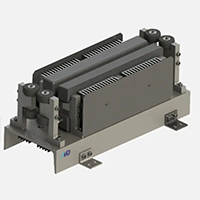
● A Linear Motor generates direct linear motion without mechanical conversion, improving precision and efficiency.
● Primary and secondary sides, windings, air gaps, and guides are essential for performance.
● Material selection and design variations directly influence thrust, durability, and system lifespan.
● Auxiliary components like sensors and controllers enhance motion control and reliability.
● Understanding each part helps engineers and technicians optimize linear motors for industrial and automation applications.
A linear motor generates linear motion by directly creating a moving magnetic field along its length. The motor typically consists of two main parts: a primary side, which contains windings that produce the magnetic field, and a secondary side, which reacts to this field to produce motion. The absence of mechanical conversion reduces energy losses, vibration, and wear.
Linear motors come in several types based on their operating principles:
● Linear Induction Motors (LIM): Use electromagnetic induction to generate thrust.
● Linear Synchronous Motors (LSM): Synchronize the magnetic field of the primary with the motion of the secondary for precise control.
● Linear DC Motors: Direct current flows through windings, creating magnetic interaction with permanent magnets to produce motion.
Linear motors find applications in various sectors:
● Industrial automation: Conveyors, robotic arms, and pick-and-place machines.
● Transportation: Magnetic levitation trains and automated shuttles.
● Robotics: High-speed actuators for assembly lines and precision movement.
Note:For engineers, evaluating load requirements and travel distances early ensures the motor type aligns with system demands.
Component | Material/Type | Function | Notes |
Core | Laminated silicon steel | Reduces eddy current losses | Improves efficiency |
Windings | Single-phase / Multi-phase | Generates magnetic field | Placement affects thrust |
Insulation | High-temperature materials | Protects winding | Prevents breakdown |
Cooling | Passive/Active | Dissipates heat | Ensures continuous operation |
The primary side generates the magnetic field necessary for motion:
● Core Materials: Laminated silicon steel reduces eddy current losses and enhances efficiency.
● Windings: Single-phase, two-phase, or three-phase windings are configured depending on motion smoothness and thrust requirements.
● Cooling and Insulation: Proper thermal management ensures continuous operation and prevents insulation breakdown.
Note:Ensure winding selection balances thrust needs and heat dissipation to avoid premature failure.
The secondary side reacts to the magnetic field, producing linear motion:
● Structure: Can be solid or slotted, influencing force distribution and mechanical rigidity.
● Materials: Copper or aluminum conductors provide efficient current paths, while non-magnetic supports maintain structural integrity.
● Function: Acts as the moving part in most configurations, critical for thrust consistency.
The air gap between primary and secondary sides is a critical design parameter:
● Precision: Small gaps maximize magnetic coupling but require precise alignment.
● Performance Impact: Larger gaps reduce force efficiency and may cause vibrations.
Guides ensure the secondary moves smoothly along the desired path:
● Alignment: Proper guide installation prevents binding or uneven wear.
● Mechanisms: Single-sided (unilateral) or double-sided (bilateral) guides adjust stability and normal forces.
These components protect the motor and system from mechanical damage:
● Function: Limit travel and prevent collisions at extreme positions.
● Applications: Essential in automation systems with repetitive, high-speed cycles.
Type | Primary/Secondary Structure | Advantages | Typical Applications |
Flat | Primary on one side of flat secondary | Simple, cost-effective | Standard automation |
Cylindrical | Winding surrounds tubular secondary | Compact, efficient | Limited space / hybrid motion |
Disc | Disc-shaped secondary | Adjustable torque and speed | Rotational-to-linear systems |
● Primary/Secondary Structure: The primary winding sits on one side of a flat secondary plate.
● Advantages: Simple design, cost-effective, and widely used.
● Disadvantages: High normal force on one side can cause unwanted friction or suction.
● Structure: Cylindrical winding surrounds a tubular secondary.
● Applications: Limited-space or rotary-linear hybrid systems.
● Design Considerations: Efficient for continuous linear travel in compact designs.
● Functionality: The secondary is a disc; the primary applies tangential forces.
● Use Cases: Rotational-to-linear applications or systems requiring combined motion types.
● Design Benefit: Adjustable torque and speed without gear reduction.
Note:Each design type addresses different force, travel, and installation constraints, so selection must match system goals.
● Position Sensors: Track linear position for closed-loop control.
● Speed Sensors: Ensure consistent motion during high-precision tasks.
● Function: Regulate current in the primary winding to control speed and force.
● Features: Can include programmable motion profiles and overload protection.
● Role: Stabilize the motor and maintain air gap alignment.
● Impact: Prevents vibrations, extending the life of primary and secondary components.
● Core Efficiency: Magnetic permeability impacts flux density and force output.
● Loss Reduction: Laminations reduce eddy current losses and heat.
● Secondary Conductors: Copper and aluminum optimize induced current paths.
● Performance Effect: Directly influences thrust, speed, and efficiency.
● Thermal Endurance: Insulation must withstand operating temperatures.
● Longevity: Correct material selection reduces maintenance frequency.
Design Variation | Pros | Cons | Best Use |
Single-sided | Cheaper, simpler | Uneven forces | Short travel systems |
Double-sided | Balanced force, stable | Higher cost | High-precision motion |
Short Primary | Lower cost, easy install | Limited thrust | Compact automation |
Long Primary | Higher thrust | More expensive | Extended travel systems |
● Single-Sided: Simpler and cheaper but prone to uneven magnetic forces.
● Double-Sided: Balanced force distribution, higher stability, higher cost.
● Short Primary: Lower cost, easier installation, suitable for short travel.
● Long Primary: Higher thrust over extended travel, ideal for continuous motion systems.
● Passive: Heat sinks and natural convection.
● Active: Forced air or liquid cooling, essential for high-power applications.
● Compact: Saves space, ideal for small-scale robotics.
● High-Power: Supports heavy loads and high acceleration, suited for industrial automation.
● Look for discoloration, insulation wear, or loose windings.
● Check for misalignment and uneven gaps, especially after high-load operations.
● Ensure linear guides and bearings are adequately lubricated to prevent wear.
● Consider higher-grade conductors, advanced insulation, or better cooling methods.
Note:Scheduled maintenance and incremental upgrades can significantly extend motor service life and reduce downtime.
Understanding the parts of a linear motor is key for efficiency and reliability. The primary and secondary sides, windings, air gaps, and guides all impact performance. Companies like dlmd offer advanced linear motors with precise design and high-quality materials, helping engineers and technicians achieve smoother motion, longer lifespan, and improved productivity.
A: A linear motor produces direct straight-line motion using magnetic fields, eliminating the need for gears or screws.
A: Key parts include the primary side with windings, the secondary side, air gaps, guides, and auxiliary components like sensors and controllers.
A: The air gap affects magnetic interaction and efficiency; a precise gap ensures smooth, accurate motion.
A: Linear motors move objects directly in a line, while traditional motors use rotational motion converted with mechanical parts.
A: Yes, fewer mechanical parts mean less wear, and proper material selection extends motor lifespan.
A: Variations include single-sided vs. double-sided, short vs. long primary/secondary, and flat, cylindrical, or disc types.


 English