
Views: 689 Author: Site Editor Publish Time: 2025-12-10 Origin: Site


Roller conveyors are vital components in material handling systems, consisting of a series of rollers that transport goods efficiently across various industries. These systems are essential in automating the movement of materials, reducing manual labor, and boosting productivity.
In modern industries, roller conveyors are widely used in material handling, warehousing, manufacturing, logistics, and e-commerce. They move items such as boxes, pallets, and packages quickly and smoothly, making them indispensable in production lines and warehouses.
The significance of roller conveyors lies in their ability to streamline operations, reduce bottlenecks, and improve throughput. In warehousing, they are crucial for sorting, packaging, and inventory management, optimizing space and reducing operational costs. In automation, roller conveyors work alongside robotics and other systems to create efficient, automated workflows.
Overall, roller conveyors are central to modern supply chains, driving efficiency, safety, and cost-effectiveness across diverse industries.
A roller conveyor is a mechanical system used for moving goods and materials efficiently from one location to another. It consists of a series of rollers placed in a horizontal alignment, creating a continuous surface over which items can roll. This system is particularly beneficial in environments where the transportation of materials needs to be smooth, efficient, and automated.
The main components of a roller conveyor include:
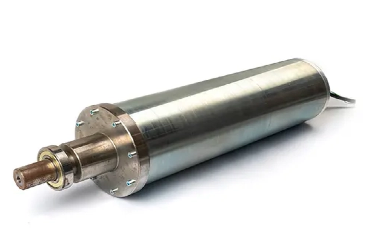
Rollers: These are cylindrical wheels that form the surface over which goods travel. They are typically made from materials like steel, plastic, or aluminum, depending on the type of material being transported.
Drive System: This consists of motors, belts, or chains that provide the power needed to rotate the rollers. In powered roller conveyors, the drive system ensures continuous movement of materials.
Support Frames: These are the structural components that hold the rollers in place, providing stability and support for the entire conveyor system.
Drives: In powered roller conveyors, drives transfer power to specific rollers to ensure materials move across the conveyor.
The primary function of a roller conveyor is to transport various materials, particularly those that need to be moved smoothly and efficiently, such as boxes, pallets, and packages. They are ideal for handling items that are uniform in shape or size, providing easy movement without the need for manual labor. Roller conveyors are widely used in industries like warehousing, manufacturing, logistics, and e-commerce, where rapid and reliable material handling is essential.
A roller conveyor operates on a simple but effective principle: roll or slide. Materials placed on the conveyor roll or slide along a series of cylindrical rollers, which are aligned horizontally. The movement is typically powered either by gravity or a motorized drive system, depending on the type of roller conveyor.
Gravity-powered roller conveyors rely on the natural force of gravity to move materials. When goods are placed on the conveyor, they naturally move downward, making them ideal for short-distance transport where no external power source is available.
Powered roller conveyors, on the other hand, use motors to drive the rollers, which push the materials forward. This method is more suitable for longer distances or when heavier loads need to be moved.
Gravity Roller Conveyors:
These conveyors utilize gravity to move goods. They are typically used on sloped surfaces, where gravity forces materials to move from a higher point to a lower point. Gravity roller conveyors are low-maintenance, cost-effective, and ideal for short-distance material handling or in environments where an external power supply isn't available.
Powered Roller Conveyors:
Powered by motors, these conveyors are ideal for moving heavier items over longer distances. The drive system transfers power to the rollers, ensuring consistent movement of materials regardless of their weight. Powered roller conveyors are commonly used in applications requiring automation, such as on production lines or in distribution centers.
Roller conveyors are versatile and widely used across industries. In warehouses, they streamline sorting and packing processes. In factories, they help in assembly lines, while logistics centers use them for efficient goods transportation. Their ability to handle a variety of products makes roller conveyors an essential part of modern material handling systems.
Roller conveyors are highly efficient, moving materials quickly and automating material handling, which reduces the need for manual labor. The rollers allow goods to roll or slide easily, minimizing friction and leading to faster processing times. With fewer moving parts, roller conveyors are reliable and less prone to breakdowns. Regular maintenance like cleaning and lubrication ensures smooth operation with minimal downtime.
Roller conveyors are adaptable and can handle a wide range of materials, making them suitable for various industries. They can transport items of different sizes, shapes, and weights, from small packages to large pallets. Whether moving lightweight boxes or heavy machinery parts, roller conveyors can be customized to accommodate diverse materials and environments, such as warehouses, manufacturing plants, and logistics hubs.
Roller conveyors offer significant customization options. They can be designed to meet specific needs by adjusting roller spacing, choosing materials (plastic, steel, rubber), or incorporating features like variable speed drives. The system can also be adapted for inclined or curved paths, allowing seamless integration into existing layouts. This flexibility ensures roller conveyors fit well into various workflows.
Compared to manual handling and other material transportation systems, roller conveyors are more energy-efficient. Gravity-driven systems, in particular, require minimal energy input, helping reduce labor costs and energy consumption. Powered roller conveyors optimize motor usage, which lowers operational costs and promotes a more sustainable, eco-friendly operation.
In logistics and warehousing, roller conveyors are crucial for sorting, storing, and transporting goods efficiently. They automate material flow, reducing manual handling and improving accuracy. Items move seamlessly between storage areas, sorting zones, and packing stations, speeding up processes and minimizing errors. Roller conveyors are ideal for handling various package sizes, making them essential in large distribution centers.
In manufacturing, roller conveyors are used to move materials along production lines. They transport raw materials, semi-finished products, or finished goods between different stages of production, ensuring a smooth and organized flow. By reducing bottlenecks and speeding up assembly tasks, they help maintain consistent productivity. Roller conveyors are also commonly integrated with automation systems to optimize production efficiency.
For e-commerce, roller conveyors play a vital role in order processing, picking, and packing. They quickly move goods from storage to picking stations and then to packing areas for shipment. Automated sorting systems, often linked to roller conveyors, direct the right items to the right fulfillment zones, improving speed and accuracy. This helps businesses scale their operations while maintaining order accuracy and reducing labor costs.
In food processing, roller conveyors are used for sorting, packaging, and transporting food products within production facilities. They handle both heavy and delicate items, like fruits or packaged goods, and ensure smooth workflows across production stages. Their easy-to-clean design makes them ideal for food safety standards, and their versatility allows for integration with various production and packaging systems.
Answer: Roller conveyors can transport a variety of materials such as boxes, pallets, packages, metal parts, and other solid items that are stable enough to roll along the conveyor. The material choice often depends on the weight and size of the items.
Answer: A gravity roller conveyor relies on the force of gravity to move materials, making it ideal for short distances or areas without electrical power. A powered roller conveyor uses motors to move materials, making it suitable for longer distances or handling heavier loads.
Answer: Regular maintenance of roller conveyors includes cleaning rollers, checking for worn-out parts, lubricating moving components, and ensuring the alignment of the system. It's important to inspect the system periodically to avoid downtime and ensure long-term operation.
Answer: Yes, roller conveyors can be customized to meet specific operational needs. Customizations can include adjusting the roller spacing, using different types of rollers (e.g., steel, plastic, or rubber), adding variable speed drives, or designing conveyors for special materials or environments.
Roller conveyors are essential components in industrial automation and material handling systems, offering a reliable and efficient solution for transporting goods across various industries. Their ability to automate material movement, reduce manual labor, and improve operational efficiency makes them a key part of modern manufacturing, warehousing, logistics, and e-commerce operations. With benefits such as versatility in handling different materials, energy efficiency, and customization options to suit specific needs, roller conveyors are a valuable investment for businesses looking to optimize their workflows.
When selecting a roller conveyor system, it's important to consider factors such as the types of materials being transported, the required speed and capacity, and the specific operational environment. Understanding your unique business needs will help you choose the right system that maximizes efficiency and minimizes costs.
If you're looking to enhance your material handling capabilities, we encourage you to explore various roller conveyor options and reach out for more information or a consultation. Our team is ready to help you find the perfect solution to meet your requirements and elevate your business operations.


 English