
Views: 0 Author: Site Editor Publish Time: 2026-01-21 Origin: Site


Roller conveyors are vital in material handling systems. They move goods efficiently in warehouses and factories. These conveyors simplify transport, improve efficiency, and reduce labor.
In this article, we will explain how roller conveyors work and their types. You’ll learn how they boost productivity and cut costs.
By the end, you’ll understand how roller conveyors can streamline your operations. Learn more about our products at Motor and Drive.
A roller conveyor is a type of conveyor system that uses cylindrical rollers placed within a frame to move goods along a production or storage line. The rollers are designed to allow materials to move smoothly and efficiently across various surfaces. Unlike other conveyor types, roller conveyors typically operate by either gravity or powered motor systems.
These conveyors are a staple in industries where continuous and efficient product flow is crucial. From simple manual push systems to fully automated powered conveyors, roller conveyors are highly versatile and adaptable to various materials, such as pallets, cartons, and trays.
Roller conveyors consist of a few essential parts:
1. Rollers: Cylindrical parts that allow goods to move smoothly along the conveyor.
2. Frame: The supporting structure that holds the rollers in place.
3. Drive System: Either powered by electric motors or gravity-driven, depending on the design.
4. Control Mechanism: In some cases, the conveyor system may include sensors, controls, and integration with warehouse management systems (WMS) for optimal functionality.
The simplicity of the design is what makes roller conveyors so effective and reliable across various applications, ranging from small-scale production lines to large warehouse systems.
Component | Function |
Rollers | Cylindrical parts that allow goods to move smoothly along the conveyor. |
Frame | The supporting structure that holds the rollers in place. |
Drive System | Either powered by electric motors or gravity-driven, depending on the design. |
Control Mechanism | In some cases, the conveyor system may include sensors, controls, and integration with warehouse management systems (WMS) for optimal functionality. |
Roller conveyors are used across a wide range of industries, including:
● Packaging: To move goods efficiently through packing and sorting areas.
● Manufacturing: To transport products from one area of the factory to another.
● Warehousing and Distribution: In warehouses, they streamline the flow of goods and improve inventory management.
● Logistics: Roller conveyors help speed up material handling processes, especially in large distribution centers.
Roller conveyors can be classified into two main types: gravity roller conveyors and powered roller conveyors. Both have unique advantages based on the type of product being handled and the specific requirements of the workflow.
● Gravity Roller Conveyors: These conveyors rely on the force of gravity or a gentle push to move items along the rollers. They are the most cost-effective solution and are often used for light loads or when products need to be transferred from higher to lower elevations.
● Powered Roller Conveyors: These use electric motors to drive the rollers, ensuring a consistent and controlled movement of heavier products or for applications requiring precise control. Powered conveyors are ideal for high-speed systems, long-distance travel, or integration with sorting and packaging lines.
Roller conveyors work through a combination of several components:
● Rollers: The primary elements that allow materials to move. They can be made from materials such as stainless steel, plastic, or aluminum.
● Drive System: Either a motor or gravity system drives the rollers. Powered systems use electric motors, while gravity systems rely on slopes or manual force.
● Control System: In automated systems, the conveyor movement is often integrated with a warehouse management system (WMS) that controls the flow and sequencing of goods.
Advanced roller conveyors incorporate control systems that coordinate the movement of goods. These systems can include sensors to detect obstructions or changes in speed and direction. In automated environments, roller conveyors are often integrated with robotics or sorting systems to ensure smooth, uninterrupted product flow.
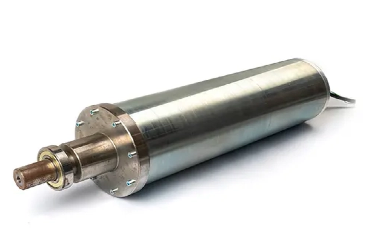
Gravity roller conveyors are the most basic type and are commonly used in warehouses and simple production lines. They are highly cost-effective and easy to maintain, making them ideal for transferring light to medium-weight loads. They require little to no electricity and are often used to move products between different height levels.
Key Features:
● Simple and cost-effective.
● Works based on gravity or manual pushing.
● Best for lightweight products and short distances.
Powered roller conveyors are driven by electric motors and can move heavy or bulky items over longer distances. These conveyors offer controlled movement and can be easily integrated with automated systems for efficient material handling.
Key Features:
● Ideal for heavy-duty applications.
● Consistent, controlled movement.
● Used for long distances and high-speed operations.
Curved roller conveyors are used to change the direction of product flow. They are designed to save space and optimize the layout of a facility by allowing a 90-degree or 180-degree change in the direction of the product.
Key Features:
● Ideal for space-saving layouts.
● Can be integrated with straight conveyors.
● Suitable for changing the flow direction of products.
Inclined roller conveyors are designed to move items up or down slopes. They can be powered or gravity-driven and are typically used in situations where goods need to be moved between floors or across different elevations.
Key Features:
● Designed for vertical transport.
● Used in multi-floor systems or areas with height differences.
Type | Description | Best For |
Gravity Roller Conveyors | Operates using gravity or a gentle push to move items. | Light to medium-weight loads; short distances |
Powered Roller Conveyors | Driven by electric motors for controlled movement. | Heavy-duty applications; long-distance travel |
Curved Roller Conveyors | Used to change direction of the product flow. | Space-saving layouts; directional changes |
Inclined Roller Conveyors | Moves items up or down slopes, powered or gravity-driven. | Vertical transport in multi-floor systems |
Roller conveyors significantly speed up the movement of goods, reducing the time spent on manual labor. With the integration of powered systems, they provide a continuous flow of materials, ensuring that production lines run smoothly.
Roller conveyors are known for their robustness and long lifespan. They are simple systems with minimal moving parts, reducing the chances of breakdowns and ensuring low maintenance costs.
Compared to other types of conveyors, roller conveyors are cost-effective to install and maintain. Gravity roller conveyors, in particular, have no operating costs, making them a great choice for simple transport needs.
Benefit | Description |
Increased Efficiency and Speed | Reduces time spent on manual labor and speeds up material handling. |
Low Maintenance and Durability | Simple system design with minimal moving parts, leading to fewer breakdowns and lower maintenance costs. |
Cost-Effectiveness | Affordable installation and maintenance, particularly for gravity conveyors which incur no operating costs. |
In warehouses, roller conveyors streamline the movement of goods, from receiving and storage to picking and packing. They improve inventory control and reduce handling time.
Roller conveyors are widely used in production lines to transport raw materials, semi-finished goods, or finished products. They reduce downtime and increase productivity by ensuring a continuous flow of materials.
In packaging lines, roller conveyors move products through various stages, from filling and sealing to labeling and final inspection. They also play a key role in sorting systems by directing products to different zones.
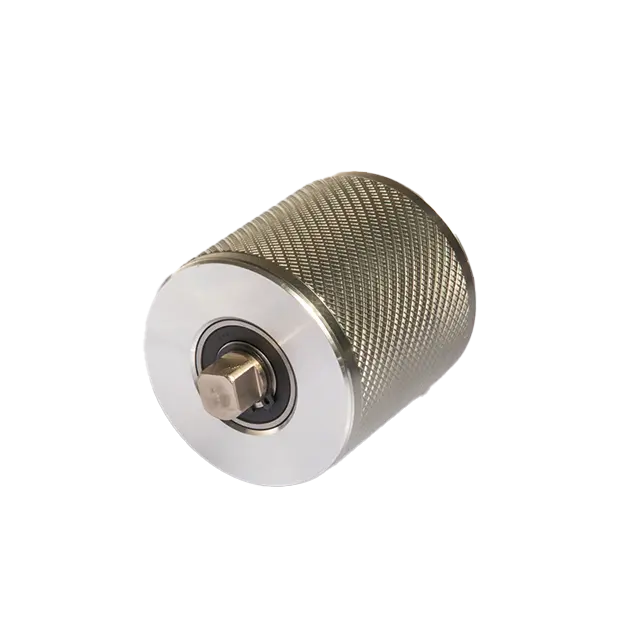
Roller size and spacing can be adjusted based on the type of product being handled. For heavier loads, larger rollers with wider spacing are used to ensure proper support.
Roller conveyors can be designed with modular components, making it easy to adjust the layout as needed. This flexibility is especially beneficial for dynamic environments where space and workflows may change over time.
Roller conveyors can be easily integrated with other material handling systems, such as lifts, robots, or sorting mechanisms, to create a comprehensive automated solution.
Roller conveyors are essential in modern material handling, enhancing efficiency, speed, and cost-effectiveness. They are ideal for industries like warehousing, manufacturing, and packaging. Whether gravity-driven or powered, their durability and low maintenance make them versatile solutions. Businesses benefit from roller conveyors to streamline operations. Motor and Drive offers customized solutions to improve productivity and meet specific needs.
A: A roller conveyor is a system that uses cylindrical rollers to move goods along a production or storage line. It operates either by gravity or powered motors.
A: Roller conveyors move materials by placing them on rollers. Gravity conveyors rely on slopes, while powered conveyors use motors to control movement.
A: Roller conveyors increase efficiency, speed, and cost-effectiveness by reducing manual labor and optimizing product flow.
A: Yes, roller conveyors can be customized for different load types, speeds, and operational environments to meet specific business needs.


 English