
Views: 0 Author: Site Editor Publish Time: 2026-01-28 Origin: Site


Material handling systems are vital in industries for efficient product movement. Powered roller conveyors and MDR conveyors each offer unique benefits.
This article explores the differences between powered roller conveyors and MDR conveyors. You will learn about their functions, applications, and energy efficiency.
By the end, you’ll know which conveyor is right for your needs. Learn more about our products at Motor and Drive for tailored solutions.
A powered roller conveyor is a mechanical system designed to move materials along a track with the help of electric motors. The motors drive rollers, allowing for the continuous movement of goods, which is particularly beneficial in applications that require heavy loads or long distances.
This system is highly efficient, cost-effective, and can handle large materials with ease. Powered roller conveyors are typically equipped with a motorized drum that powers a chain or belt, transferring energy to the rollers, which in turn move the products along the conveyor track.
● Rollers: The key components of the system, which are powered by the electric motor to move goods efficiently.
● Drive Mechanism: This is the system that transfers power from the motor to the rollers, commonly using belts, chains, or gears.
● Control System: This ensures the smooth operation of the conveyor by managing the speed and flow of materials, helping to optimize material handling.
Powered roller conveyors are frequently used in large-scale industries where efficient and quick transportation of materials is essential, such as in warehouses, automotive assembly lines, and manufacturing plants.
Powered roller conveyors are versatile and widely used in numerous industries:
● Warehousing and Logistics: They are ideal for moving products between different stages of storage, sorting, and distribution in warehouses.
● Automotive Manufacturing: These conveyors are used in production lines to move automotive parts efficiently, ensuring smooth workflow.
● Food and Beverage: They help move packaged goods along production lines, ensuring the smooth flow of items to the next stages of production.
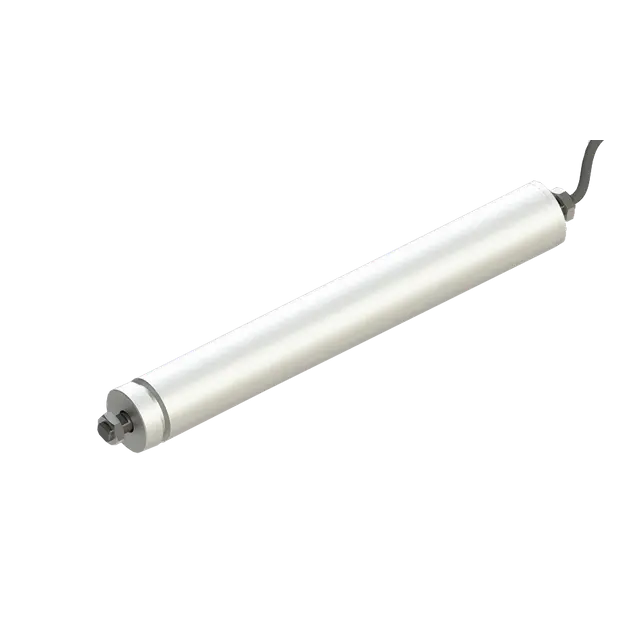
Motor-driven roller (MDR) conveyors differ from powered roller conveyors in that each roller has its own independent motor. This allows for individual control of each roller, providing greater flexibility and precision in material transport. This system is particularly useful when varying speeds or accumulation capabilities are needed.
Unlike powered roller conveyors that use a single motor for the entire system, MDR conveyors provide on-demand, energy-efficient movement, making them ideal for environments that require high customization and efficiency.
● Motorized Rollers: Each roller is equipped with a small motor, allowing for independent, energy-efficient movement when needed.
● Control System: A more advanced system that manages the operation of each motorized roller individually, providing greater flexibility and precision.
● Sensors: These detect the presence of materials, ensuring that the system only operates when necessary and preventing unnecessary energy consumption.
MDR conveyors are especially beneficial in environments where accumulation, modularity, and high-speed sorting are required. Their ability to work independently makes them highly adaptable for a range of material handling applications.
● Energy Efficiency: One of the primary advantages of MDR conveyors is their energy efficiency. Since each roller operates independently, only the rollers that need to move are powered, reducing energy consumption.
● Modularity: The modularity of MDR conveyors allows businesses to easily add or remove rollers as needed, making them highly adaptable for changing requirements.
● Reduced Wear: The decentralized system reduces the mechanical stress on the conveyor, leading to lower maintenance needs and less wear and tear over time.
MDR conveyors are ideal for environments that demand precise control, high efficiency, and minimal energy use, making them a great choice for modern automated systems.
● Powered Roller Conveyor: Typically uses a centralized motor system that powers the rollers through chains, belts, or gears. This system offers synchronized movement, with all rollers starting and stopping together.
● MDR Conveyor: Each roller is independently motorized, providing greater flexibility. This decentralized design allows for individual control of rollers, enabling more precise operation and more flexible setups.
● Powered Roller Conveyor: Simple design with fewer motors and components. It’s ideal for applications where continuous, uniform movement is required.
● MDR Conveyor: A more complex system with individual motors for each roller. This design offers more flexibility and control but requires more advanced controls and systems integration.
● Powered Roller Conveyor: Primarily designed for continuous movement. It’s ideal for moving goods along a straight path with minimal interruptions.
● MDR Conveyor: Offers the ability to accumulate materials, making it ideal for environments where product pauses or accumulation is necessary, such as in assembly lines or packaging systems.
Feature | Powered Roller Conveyors | MDR Conveyors |
Power Source | Single centralized motor powers all rollers | Each roller has its own motor |
Configuration | Centralized motor, often with belts or chains | Decentralized motorized rollers |
Movement Control | All rollers move simultaneously, ideal for continuous flow | Individual roller control, ideal for accumulation or sorting |
Flexibility | Limited flexibility, ideal for simple, continuous movement | Highly flexible, ideal for accumulation and on-demand movement |
Energy Efficiency | Continuous power usage even if not all rollers are in use | Energy-efficient; only powered when rollers are in use |
Powered roller conveyors are typically always running, even when the goods are not moving. While this ensures smooth and continuous movement, it can lead to higher energy consumption, particularly in systems where rollers are continuously running.
MDR conveyors are designed to be more energy-efficient. Since only the rollers that need to move are powered, this reduces overall energy consumption. This on-demand usage makes MDR conveyors ideal for industries focused on energy conservation and sustainability.
While powered roller conveyors may be more affordable upfront, MDR systems can offer long-term savings due to their energy efficiency and lower operational costs. However, MDR conveyors tend to have higher initial costs because of their advanced motors and control systems.
Aspect | Powered Roller Conveyors | MDR Conveyors |
Power Usage | Continuous power usage, even when not all rollers are active | On-demand power; only active rollers are powered |
Energy Consumption | Higher overall energy usage | More energy-efficient with lower consumption |
Initial Cost | Lower initial cost | Higher initial cost due to more complex motorized setup |
Long-Term Costs | Higher due to continuous operation | Lower due to energy savings and reduced maintenance |
The control system of a powered roller conveyor is relatively simple, generally focusing on the start, stop, and speed control of the motor. It is ideal for straightforward applications with minimal complexity.
MDR conveyors have more sophisticated control systems, with each motorized roller operating independently. These systems can include sensors, controllers, and communication between rollers, allowing for more precise control over material flow and accumulation.
MDR conveyors are highly flexible because each roller operates independently. This allows for customized configurations, such as accumulation zones or variable speed control, making them ideal for more complex material handling systems.

Powered roller conveyors are best suited for industries requiring constant material flow and heavy-duty applications. These include:
● Warehouses and Distribution Centers: Where goods need to move continuously from one area to another.
● Manufacturing: In assembly lines where products are constantly moving.
● Food Processing: For transporting packaged goods along production lines.
MDR conveyors excel in environments requiring flexibility, energy efficiency, and precision control. They are ideal for:
● SMT Assembly Lines: Where items need to accumulate or move at different speeds.
● E-Commerce Warehousing: For sorting and transporting goods that require on-demand movement.
● Electronics Manufacturing: In areas requiring precision handling of small, sensitive components.
When deciding between powered roller conveyors and MDR systems, consider factors like load requirements, energy efficiency, flexibility, and control needs. Powered roller conveyors are ideal for simple, high-speed operations, while MDR conveyors are better suited for environments requiring flexible, energy-efficient, and precise material handling.
Use Case | Powered Roller Conveyors | MDR Conveyors |
Warehousing & Distribution | Ideal for moving goods between storage and shipping areas | Best for sorting and on-demand movement in warehouses |
Manufacturing | Efficient for continuous flow in assembly lines | Perfect for areas with variable product flow or accumulation |
Food & Beverage | Useful for transporting packed goods in production lines | Suitable for clean and flexible handling of packaged items |
E-Commerce | Best for large-scale sorting and packaging | Great for customizable movement in high-speed fulfillment systems |
Powered roller conveyors and MDR conveyors each offer distinct advantages in material handling. Powered roller conveyors excel in continuous, uniform movement, while MDR conveyors are more flexible and energy-efficient. Choosing the right system depends on your specific business needs, including precision, energy savings, and space optimization. Motor and Drive offers expert guidance and tailored solutions to optimize your material handling systems and improve operational efficiency.
A: Powered roller conveyors use a centralized motor to move rollers, while MDR conveyors feature motorized rollers that operate independently, providing greater flexibility.
A: MDR conveyors are energy-efficient because they only power the rollers in use, unlike powered roller conveyors, which run continuously.
A: Powered roller conveyors provide continuous, uniform movement, making them ideal for high-speed applications with large volumes.
A: MDR conveyors offer precise control and flexibility due to their individual roller motors, making them ideal for applications requiring variable speeds and accumulation.


 English