
Views: 0 Author: Site Editor Publish Time: 2026-04-23 Origin: Site


Is your warehouse stuck with loud, inefficient AC motors? Modern facilities are rapidly switching to DC Motorized Roller (MDR) technology for better results. This guide evaluates their reliability, energy savings, and ROI. You will discover if they meet today’s rigorous industrial demands for operational success.
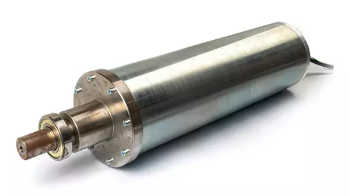
● Energy Savings: Dc Motorized Roller technology uses "Run-on-Demand" logic, reducing electricity consumption by up to 70% compared to continuous AC systems.
● Precision Control: These rollers offer superior torque and speed management, ensuring safe handling for fragile goods via smooth acceleration.
● Low Maintenance: With brushless motors and fewer mechanical linkages, MDR systems provide a higher MTBF and lower total cost of ownership.
● ZPA Capability: Integrated Zero Pressure Accumulation prevents product damage by managing zone-based flow without physical contact.
● Simplified Installation: The 24V/48V "Plug-and-Play" design reduces wiring complexity and enhances workplace safety.
Efficiency in modern logistics isn't just about speed; it's about intelligence. DC Motorized Rollers provide a "Run-on-Demand" capability that traditional AC drives cannot match. Instead of a massive motor running an entire line continuously, MDR systems only activate specific zones when a sensor detects a package. This drastically reduces power consumption and mechanical wear.
Beyond energy, 24V and 48V DC systems offer superior control. They provide precise acceleration and deceleration profiles, ensuring that fragile goods don't tip over during sudden stops. Because they operate on low voltage, they enhance workplace safety and eliminate the need for specialized high-voltage conduits in many areas.
Space-saving is another critical win. By integrating the motor and gearbox directly inside the roller tube, we eliminate bulky external drive components. This design also lowers noise pollution, creating a more sustainable environment for workers. Furthermore, these rollers generate significantly less heat, which extends the lifespan of the belts and bearings within the system.
● Energy Savings: Up to 50-70% reduction compared to continuous-run AC systems.
● Safety: Safe-to-touch low voltage reduces electrical hazards.
● Acoustics: Quiet operation facilitates better communication on the warehouse floor.
Note: Low-voltage DC systems often simplify compliance with strict workplace safety regulations, reducing insurance premiums in some regions.
Tip: Use 48V DC systems for longer conveyor runs to minimize voltage drop and reduce the required number of power supplies.
The heart of a high-performance DC Motorized Roller is Brushless DC (BLDC) technology. Unlike brushed motors, BLDC motors use electronic commutation, which removes the friction and wear associated with physical brushes. This results in a motor that lasts longer and requires almost zero maintenance.
Inside the roller, a compact internal planetary gearbox translates the high-speed rotation of the BLDC motor into the high-torque movement needed to move heavy totes. These gearboxes are precision-engineered to operate smoothly under varying loads.
To manage the system, integrated control cards act as the "brain." They communicate with the facility's Programmable Logic Controller (PLC), managing speed, direction, and braking. This distributed control architecture allows each roller to make "decisions" locally, which speeds up response times across the entire line.
Component | Function | Benefit |
BLDC Motor | Core power source | High efficiency and long lifespan |
Planetary Gearbox | Torque conversion | High load capacity in a small footprint |
Control Card | Logic and communication | Enables smart automation and ZPA |
When evaluating the Total Cost of Ownership (TCO), DC Motorized Rollers typically win over the long term. Traditional AC drives involve many moving parts—external motors, drive shafts, chains, and sprockets. Each of these represents a potential point of failure. In contrast, MDR systems have fewer mechanical linkages, which naturally leads to a higher Mean Time Between Failures (MTBF).
Installation speed is another differentiator. Setting up an AC-driven line requires complex wiring and professional electricians. DC systems are largely "Plug-and-Play." You can snap connectors together, mount the rollers, and have the system running in a fraction of the time.
Tip: Evaluate your facility's MTBF data; switching to MDR can often reduce scheduled maintenance windows by 40%.
Note: While AC motors are cheaper to buy initially, their energy consumption and maintenance costs usually exceed those of DC rollers within 18 to 24 months.
Zero Pressure Accumulation (ZPA) is perhaps the most compelling reason to use DC Motorized Rollers. In a ZPA system, products move along the conveyor without ever touching each other. Each zone is controlled by an MDR that stops if the zone ahead is occupied.
This logic-driven flow control prevents product damage, which is vital for e-commerce and fragile electronics. By using smart MDR logic, facilities can optimize throughput density. You can pack parcels closer together without the risk of "side-shunting" or pile-ups. It maximizes the number of parcels processed per hour while maintaining a gentle touch.
● Singulation: Ensures only one item occupies a zone at a time.
● Buffers: Creates dynamic storage on the line during downstream bottlenecks.
● Automation: Reduces the need for manual intervention to clear jams.
Tip: Implement ZPA logic in your sorting area to reduce the "re-work" costs associated with crushed or damaged packaging.
E-commerce and parcel sorting are the most common homes for these rollers. The ability to handle variable package sizes—from small polybags to large boxes—with high precision makes them indispensable. However, their utility extends much further.
In cleanrooms and pharmaceutical environments, the enclosed design of a DC Motorized Roller is a massive advantage. There are no exposed chains or greasy drive shafts to shed particulates. Similarly, in food and beverage logistics, stainless steel MDRs can handle washdown requirements and function reliably in temperature-controlled zones without the risk of oil leaks contaminating the product.
Assembly lines also benefit from indexed movement. Because these rollers can stop on a dime, they are perfect for positioning parts precisely for robotic arms or manual workers.
Note: DC rollers are particularly effective in "Green" building initiatives due to their minimal carbon footprint and energy-efficient operation.
Tip: For pharmaceutical applications, specify IP66-rated DC rollers to ensure they withstand rigorous chemical cleaning cycles.
Are DC Motorized Rollers perfect? Not for every single application. Their primary limitation involves weight capacity. While they excel at moving totes and boxes, they may struggle with extremely heavy pallet loads (over 1,500 kg) where high-torque AC gearmotors still reign supreme.
The initial investment is also higher. You are paying for the motor, the gearbox, and the electronics inside every single drive roller. While the ROI is clear through energy and maintenance savings, the upfront CAPEX can be a hurdle for some budgets. Finally, extreme temperatures—especially deep-freeze environments below -30°C—can impact the viscosity of the internal grease and the performance of the electronics if not specifically rated for those conditions.
Choosing the right DC Motorized Roller requires balancing several technical factors. First, determine your voltage. 24V is the industry standard, but 48V is becoming popular for heavier loads as it carries more power with less current, reducing heat in the wiring.
Next, consider the torque vs. speed trade-off. You must select a gear ratio that provides enough "kick" to start a heavy load from a dead stop but still maintains the required line speed. Finally, look at the tube material. Galvanized steel is great for general use, while stainless steel is required for food. If your packages are slippery, consider a rubber or PVC lagging for better grip.
1. Calculate Load: Determine the heaviest item each roller must move.
2. Set Speed: Define the required meters per minute (MPM) for your throughput goals.
3. Environment Check: Identify if you need specialized coatings for moisture or chemicals.
Tip: Always request a "Sizing Calculation" from your manufacturer to ensure the motor's duty cycle matches your peak operational hours.
Note: Integrated braking resistors are a must-have for conveyors on an incline to prevent "runaway" loads.
DC Motorized Rollers are the gold standard for modern automation, offering unmatched efficiency and control. While initial costs are higher, the long-term ROI through energy savings makes them a superior choice. dlmd provides these advanced solutions to help facilities achieve high-density, smart conveyance. Their high-performance rollers ensure a quieter, leaner, and more productive operation for any industrial application.
A: A Dc Motorized Roller uses run-on-demand technology, consuming power only when sensors detect packages in specific zones.
A: It offers superior speed control and higher reliability with fewer mechanical parts, leading to a lower total cost.
A: Yes, each Dc Motorized Roller operates on safe 24V or 48V low voltage, reducing electrical hazards significantly.
A: They excel at totes and boxes, but heavy pallets may require traditional high-torque AC gearmotors instead.


 English