
Views: 0 Author: Site Editor Publish Time: 2026-04-24 Origin: Site


Efficiency and productivity are paramount in modern industrial operations. Have you considered how a DC motor roller can revolutionize your material handling? In this article, you will learn how this 24V innovation enhances energy efficiency and safety across diverse industrial sectors.
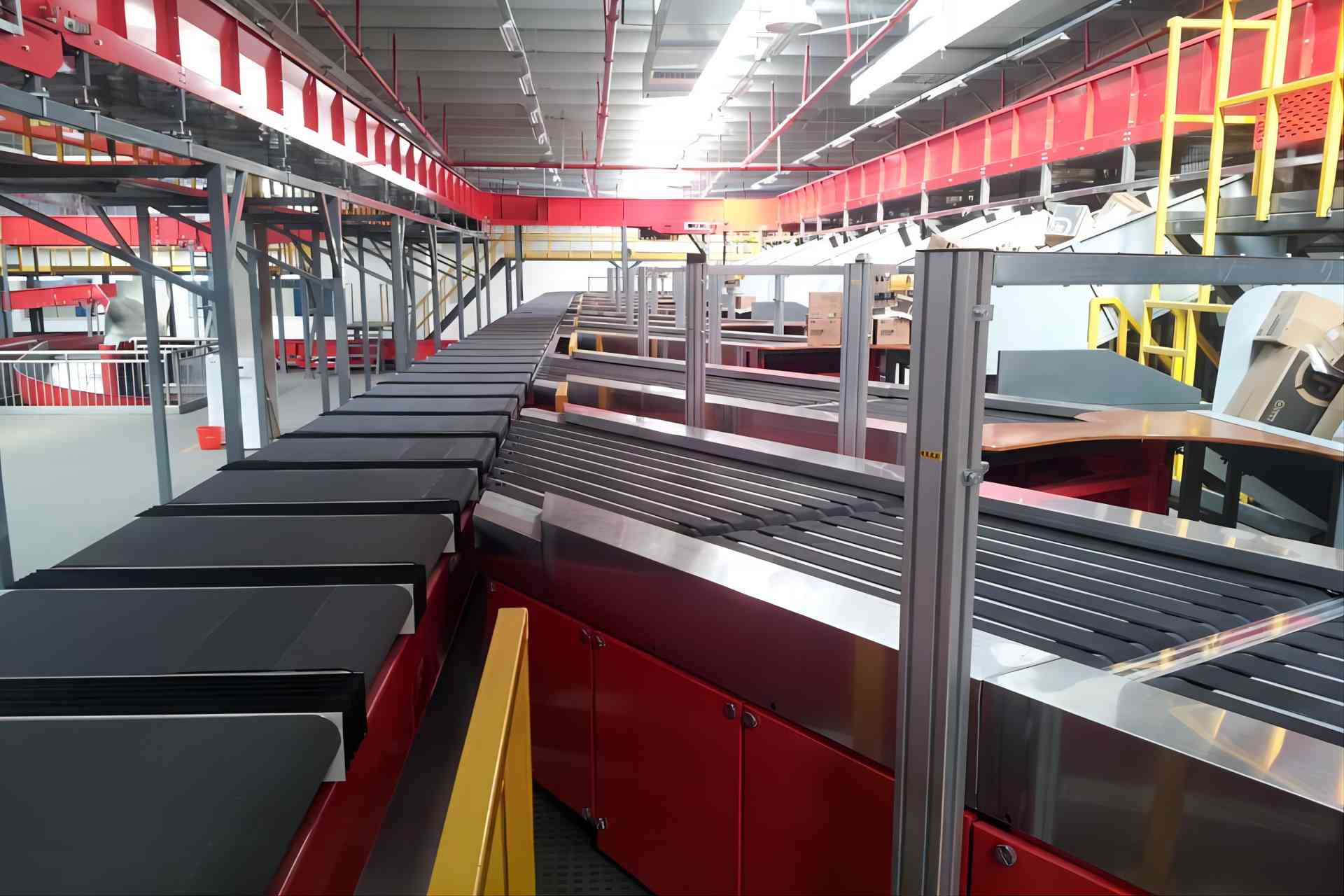
● Core Efficiency: A DC motor roller (MDR) integrates a 24V brushless motor inside the tube to provide precise, energy-efficient power for conveyor zones.
● Zero Pressure Accumulation: These rollers enable ZPA logic, allowing products to queue without touching, which eliminates back-pressure and prevents damage to fragile items.
● Versatile Applications: This technology is essential in automotive assembly, electronics manufacturing, and food processing due to its precision and hygienic design.
● Operational Savings: Using DC motor rollers reduces energy consumption and maintenance costs because they only run on demand and have fewer moving parts.
● Safety and Integration: Operating at a safe 24V low voltage, these rollers pose minimal electrical hazards and can be easily retrofitted into existing conveyor systems.
The DC motor roller represents a shift toward decentralized power in conveyor technology. Instead of one large motor driving an entire line, these rollers allow for independent movement across different sections of the system.
At the heart of the unit sits a brushless 24V DC motor designed for high torque and heat dissipation. This motor is housed within a drive tube, usually made from durable steel or lightweight aluminum depending on the environment. An internal planetary gearbox translates the motor's high-speed rotation into the specific torque needed to move industrial loads.
These rollers enable "zone control," where the conveyor is divided into individual segments. Using "Run-on-Demand" logic, a DC motor roller only spins when a product is present in its specific zone. This significantly reduces mechanical wear compared to traditional systems that run continuously regardless of load.
Precision is a hallmark of DC technology. Operators can program specific acceleration and deceleration profiles to prevent jerky movements. By synchronizing with sensors and PLC (Programmable Logic Controller) systems, they ensure a smooth flow of goods even in high-speed environments.
ZPA is perhaps the most critical function of a DC motor roller. It allows products to queue up on a conveyor without touching each other. By stopping individual rollers as items approach, the system eliminates "back-pressure," protecting fragile goods from being crushed or damaged during accumulation.
Note: 24V DC systems are inherently safer for maintenance teams because they operate below the threshold for high-voltage electrical hazards.
The versatility of the DC motor roller makes it a staple across sectors that demand both speed and gentleness.
In automotive plants, they transport heavy vehicle components with extreme precision. Because these rollers offer fine-tuned control, they are ideal for moving delicate sub-assemblies through robotic welding or painting stations without vibration.
For the electronics industry, handling sensitive circuit boards and silicon wafers requires a steady hand. The smooth, low-vibration operation of DC motor rollers prevents micro-cracks or static issues that often plague traditional belt-driven systems.
Hygiene is the priority here. Many 24V DC rollers feature stainless steel tubes and IP-rated seals to withstand washdown procedures. They help facilities comply with strict safety regulations while maintaining efficient throughput.
Modern warehouses deal with a massive variety of parcel sizes. A DC motor roller system can quickly adjust to handle everything from a small bubble mailer to a heavy corrugated box, making it the backbone of modern logistics.
Cleanrooms require equipment that does not shed particles. Brushless DC motors are ideal because they lack carbon brushes that wear down over time, ensuring a contaminant-free environment for drug manufacturing.
Navigating corners used to be a challenge for mechanical drives. Tapered DC motor rollers provide the necessary differential speed to move items through curves seamlessly, maintaining product orientation without manual intervention.
Switching from AC to DC power offers measurable improvements in facility overhead and safety.
Feature | Traditional AC Motor | 24V DC Motor Roller |
Power Consumption | High (Continuous) | Low (Run-on-Demand) |
Noise Level | Loud (Chains/Gears) | Very Quiet |
Installation | Complex/Heavy | Plug-and-Play |
Safety | High Voltage Risks | Safe Low Voltage |
Standard conveyors run all the time, wasting electricity. In contrast, DC motor rollers only draw power when they move a load. Facilities often see energy consumption drop by up to 50% after switching to 24V technology.
Because they operate on 24V DC, these systems do not require the heavy-duty conduit or specialized high-voltage licensing that AC motors do. This reduces the risk of arc flash and other electrical accidents.
Excessive noise can lead to worker fatigue and hearing loss. Internal DC motors eliminate the clatter of drive chains and external gearboxes, creating a much quieter, more productive workspace.
Without the need for large motors hanging off the side of the conveyor, the footprint of the system shrinks. This allows for tighter facility layouts and multi-tier conveyor "mezzanines" that maximize vertical space.
Choosing the right roller requires a balance of mechanical specs and control requirements.
You must match the motor’s torque to the heaviest item on your line. A DC motor roller typically comes in different gear ratios; a higher ratio provides more "pushing" power for heavy pallets, while a lower ratio allows for higher speeds.
● Galvanized Steel: Standard for most dry warehouse applications.
● Stainless Steel: Best for food and pharma washdown areas.
● Polyurethane Lagging: Increases friction to prevent packages from slipping on inclines.
The "brain" of the roller is the control card. Modern systems use EtherNet/IP or Modbus to talk to the facility's main computer, allowing for real-time adjustments and remote troubleshooting.
Note: If your facility uses an existing PLC, ensure your DC roller control cards are compatible with your specific communication protocol to avoid integration headaches.
The modular nature of 24V DC systems simplifies both the setup and the long-term upkeep of the conveyor.
Traditional systems involve complex wiring for every motor. DC motor rollers often use M8 or M12 connectors that snap together. This reduces installation time from weeks to days.
You don't always need to buy a whole new conveyor. Many businesses simply replace old "dumb" rollers with DC motor rollers in key accumulation zones to add intelligence to their existing lines.
Because these rollers can report their own status, they can alert you if a motor is running too hot or if a bearing is starting to fail. This allows you to fix the problem before the entire line shuts down.
As automation evolves, the DC motor roller is becoming more than just a drive component—it is becoming a data source.
Future rollers will likely feature built-in IoT sensors that track every "click" and turn. This data helps warehouse managers optimize flow patterns and identify bottlenecks in real-time.
With the rise of micro-fulfillment, speed is king. New generations of DC motor rollers are reaching speeds that were previously only possible with high-power AC systems.
Imagine a system that learns your facility's peak hours and adjusts roller speeds automatically to save even more power. AI integration is the next frontier for 24V DC technology.
The DC motor roller serves as the engine of modern, intelligent logistics. By offering energy savings and Zero Pressure Accumulation (ZPA) intelligence, it provides a clear competitive edge for B2B operations. When upgrading your systems, partner with dlmd for expert customization. Their specialized rollers feature custom gear ratios and coatings tailored to your unique industrial needs. This ensures superior efficiency and long-term reliability for every application.
A: Yes, they are designed for various capacities, from light parcels to heavy equipment.
A: They enable Zero Pressure Accumulation to prevent product collisions and damage.
A: Absolutely, many manufacturers offer specialized rollers for seamless navigation of curved sections.
A: Motors offer precise control for easy adjustment and synchronization with other processes.


 English