
Views: 0 Author: Site Editor Publish Time: 2026-04-24 Origin: Site


How many miles do warehouse operators travel during a single shift? Manual material movement often leads to operator fatigue and costly logistics inefficiencies.
A motorized roller solves this by using internal electric motors to drive conveyor systems without external belts. In this post, you will learn how these rollers quadruple order preparation speeds and transform productivity.
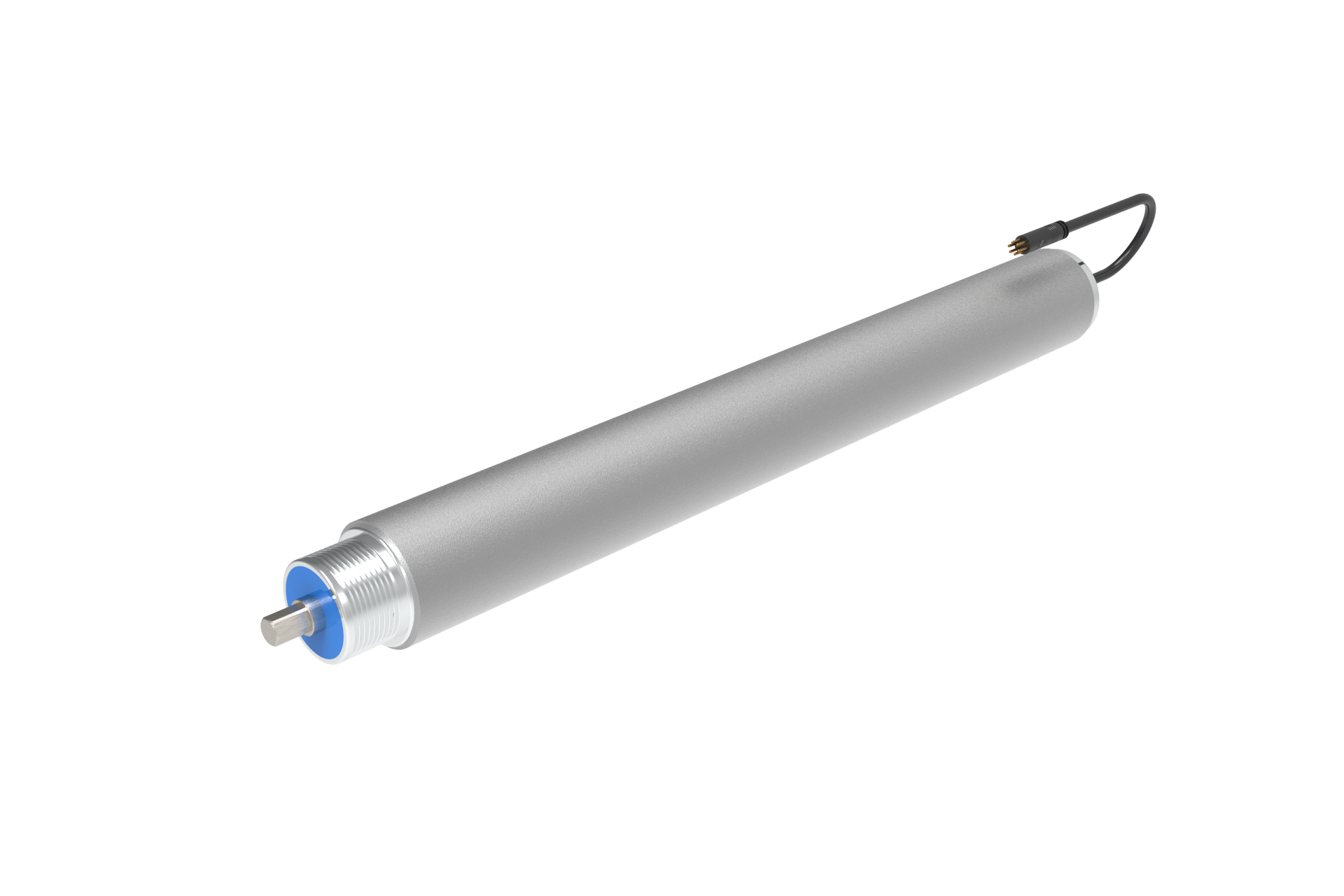
● Massive Productivity Boost: Integrating a motorized roller system can quadruple the number of orders prepared, significantly improving overall warehouse output.
● Versatile Load Handling: These systems are capable of transporting a wide range of goods, from small boxes to heavy pallets weighing up to 1.65 tons.
● Efficiency in Motion: Motorized rollers achieve consistent travel speeds between 35 and 65 feet per minute, making them ideal for covering long distances within a facility.
● Advanced Accumulation: They enable "zero-pressure" accumulation, allowing products to line up without touching, which prevents damage to sensitive merchandise.
● Enhanced Safety and ROI: By eliminating manual handling and reducing forklift traffic, these systems minimize workplace accidents while providing a fast return on investment.
● Smart System Integration: Through the use of photocells and Warehouse Control Systems (WCS), motorized rollers coordinate complex movements and maintain precise spacing between unit loads.
The primary job of a motorized roller is to streamline product transportation, saving time and gaining efficiency. These rollers act as automatic handling equipment charged with moving, accumulating, or distributing goods from one location to another.
● Automated Goods Transportation: They connect two distinct installations, such as a warehouse and a production plant, or link two separate areas within a single building.
● Controlled Unit Load Handling: Internal motors propel heavy unit loads, including pallets weighing up to 1.65 tons, in a steady and controlled way.
● Smart Product Accumulation: Motorized rollers allow pallets or boxes to line up one after the other. Some systems maintain a small separation to prevent contact, known as zero-pressure accumulation, while others allow goods to touch for high-flow buffer zones.
● Directional Changes and Routing: They power turntable conveyors that change travel direction while maintaining load orientation. Mixed transfer modules using both rollers and chains can also change both the direction and the orientation of a pallet.
● Vertical Integration: These rollers serve as the essential interface for automated components like lifts and transfer cars, moving goods between different floor levels or system stages.
● Ergonomic Picking Stations: Specialized motorized rollers feature ergonomic designs that allow them to function as pick tables, bringing goods directly to the operator at a comfortable height.
● System Distribution and Sorting: The system sorts merchandise into specific channels classified by route or destination, ensuring efficient dispatch preparation.
Note:Motorized rollers are particularly effective when goods must travel longer distances or when moving exceptionally heavy merchandise.
Motorized rollers offer great versatility, providing solutions for practically any industrial situation.
● E-commerce and Logistics Hubs: They streamline the massive flow of small parcels and boxes through complex circuits, connecting the front of automated installations directly with pick stations.
● Food and Beverage Manufacturing: These systems connect production lines to storage areas to handle high daily volumes. For example, a large food company might use them to move 600 pallets of product from production to storage every single day.
● Pharmaceutical and Medical Supply: Motorized rollers ensure the safe and hygienic transport of sensitive items. They can incorporate checkpoints to verify that the weight and measurements of a unit load correspond exactly to warehouse requirements.
● Automotive and Industrial Parts: High-capacity pallet conveyors move heavy-duty components through various assembly and storage stages.
The operation of motorized rollers is closely linked to the specific circuit configuration and the connection needs they fulfill.
● Integrated Motor Design: Unlike traditional systems, these are equipped with internal electric motors that move unit loads in a highly controlled way. This design is compact and reduces the mechanical complexity of the conveyor line.
● The Role of Photocells: Conveyors use photocells to continuously register the location of the goods. These sensors allow the control system to maintain appropriate separation between loads and ensure products continue on their path at the right time.
● WCS and WMS Integration: Medium- to high-complexity circuits require a Warehouse Control System (WCS) to coordinate movements between automated elements. A Warehouse Management System (WMS) acts as the brain of the installation, optimizing goods flow and controlling stock in real time.
● Plug-and-Play Simplicity: For simple circuits with a single infeed and destination, plug-and-play conveyors are available. They do not require a WCS because power is transmitted by simply connecting one conveyor unit to another.
Note:For complex layouts with multiple infeed and discharge points, always prioritize a WMS to act as the central brain for real-time stock control.
The benefits of implementing motorized rollers can be summarized by significant gains in speed, safety, and financial return.
Advantage | Business Impact |
Increased Productivity | Ensures continuous 24/7 flows and slashes loading/unloading times. |
Cost Savings | Offers a fast return on investment (ROI) by eliminating repetitive manual movements. |
Workplace Safety | Prevents injury by reducing manual load handling and forklift traffic. |
Versatility | Supports customizable handling equipment that adapts to company development. |
Motorized rollers achieve travel speeds of 35 to 65 feet per minute for pallets, ensuring consistent movement across long distances. They also allow companies to reassign employees from internal transportation tasks to higher-value operations.
Each conveyor circuit is formed by one or more rollers to ensure smooth and safe goods movement. The type of roller chosen depends entirely on whether it handles pallets or boxes.
● Heavy-Duty Pallet Rollers: These support unit loads of 48" x 40" or Euro pallets and a maximum weight of 1.65 tons.
● High-Speed Box Rollers: These move boxes in a straight line, preventing contact or allowing accumulation depending on the specific model.
● Specialized Curved Rollers: These incorporate configurable curves into the circuit to maintain momentum through intersections.
● Accumulation vs. Continuous Flow: Accumulation rollers are ideal for temporary buffer zones, while live or continuous rollers are better suited for long distances and extremely high flows.
While motorized rollers are vital for fully automated (AS/RS) warehouses, traditional facilities are increasingly choosing them to raise throughput.
● Transitioning from Traditional Warehouses: More businesses are replacing manual pallet jacks and forklifts with motorized circuits to gain efficiency and safety.
● Automated Docking (ATLS): In docking areas, rollers act as preload channels where pallets accumulate by route, waiting for trucks. Automatic truck loading systems (ATLS) improve agility during receipt and dispatch.
● Safety Barriers and Access Control: Modern circuits incorporate safety enclosures, pedestrian crossings, and access control doors to guarantee operator safety.
● Checkpoint Integration: Circuits can include stretch wrappers, strapping machines, and automatic doors. Entry checkpoints verify that the condition and weight of a load meet warehouse requirements before entry.
Motorized rollers are designed to be extremely strong and durable, providing a long service life even in high-demand environments.
● Durability: These systems are built as robust handling equipment capable of supporting continuous operation.
● Access Protection: Integration of safety enclosures and controlled access doors ensures that operators and merchandise remain safe at all times.
● Automated Diagnostics: When integrated with WCS or WMS software, the system provides real-time data on stock flow and equipment status. This allows for proactive monitoring of the automated elements to prevent unexpected downtime.
Note:Modern motorized systems are designed to minimize manual load handling, which directly reduces the risk of accidents and repetitive motion injuries.
Motorized rollers act as the backbone of modern automation by eliminating manual travel and solving productivity bottlenecks. These versatile components allow for custom circuit designs tailored to any facility size. If your facility needs to accelerate internal operations, dlmd provides high-performance solutions that maximize throughput and safety. Their systems transform logistics by delivering reliable, high-speed movement for both boxes and heavy pallets.
A: A motorized roller streamlines product transportation, saving time and gaining efficiency in warehouse environments.
A: It can quadruple the number of orders prepared, significantly boosting warehouse productivity.
A: They create temporary buffer zones, lining up pallets or boxes with controlled separation.
A: Yes, these rollers support unit loads like pallets weighing up to 1.65 tons.


 English