
Views: 0 Author: Site Editor Publish Time: 2026-07-19 Origin: Site


Traditional sorting equipment faces a severe operational ceiling. Belt-driven, pneumatic, and ball screw systems struggle heavily when pushed for higher throughput in modern logistics, fast parcel handling, or micro-component sorting. Facilities experience compounding errors and frequent breakdowns at peak speeds. To solve this, engineers are shifting away from complex mechanical linkages. They are embracing direct-drive motion solutions instead. Upgrading to a linear motor bypasses legacy mechanical bottlenecks. This transition delivers exponential gains in positioning accuracy and cycle speed. Achieving these improvements requires rigorous engineering prerequisites. It also involves a higher initial capital expenditure. However, the operational returns easily justify the upgrade in demanding environments. You will learn how these systems eliminate backlash, optimize acceleration, and transform sorting line performance. You will also discover the necessary integration steps required to implement these systems successfully.
Legacy sorting systems typically combine rotary motors, belts, pulleys, and lead screws. Each individual component introduces microscopic positional errors. Over time, these tiny deviations compound into significant accuracy losses. Mechanical elasticity degrades performance heavily at high speeds. Belts stretch under intense acceleration. Gears experience inevitable backlash during direction changes. This mechanical compliance heavily extends settling times. Shuttles bounce slightly before stabilizing. This micro-vibration causes mis-sorts or system jams.
The direct-drive alternative solves these physical limitations fundamentally. Imagine unrolling a standard rotary motor to lay it flat. This creates a flat electromagnetic field. It applies magnetic force directly to the payload. You remove intermediate mechanical components entirely. There are no belts to snap. There are no screws to wear down.
When should a facility transition? Use this evaluation checklist to decide:
Common Mistake: Engineers often try pushing legacy belts past their rated acceleration. This leads to premature snapping and catastrophic line failures. Recognizing the physical limits of mechanical linkages prevents costly unplanned downtime.
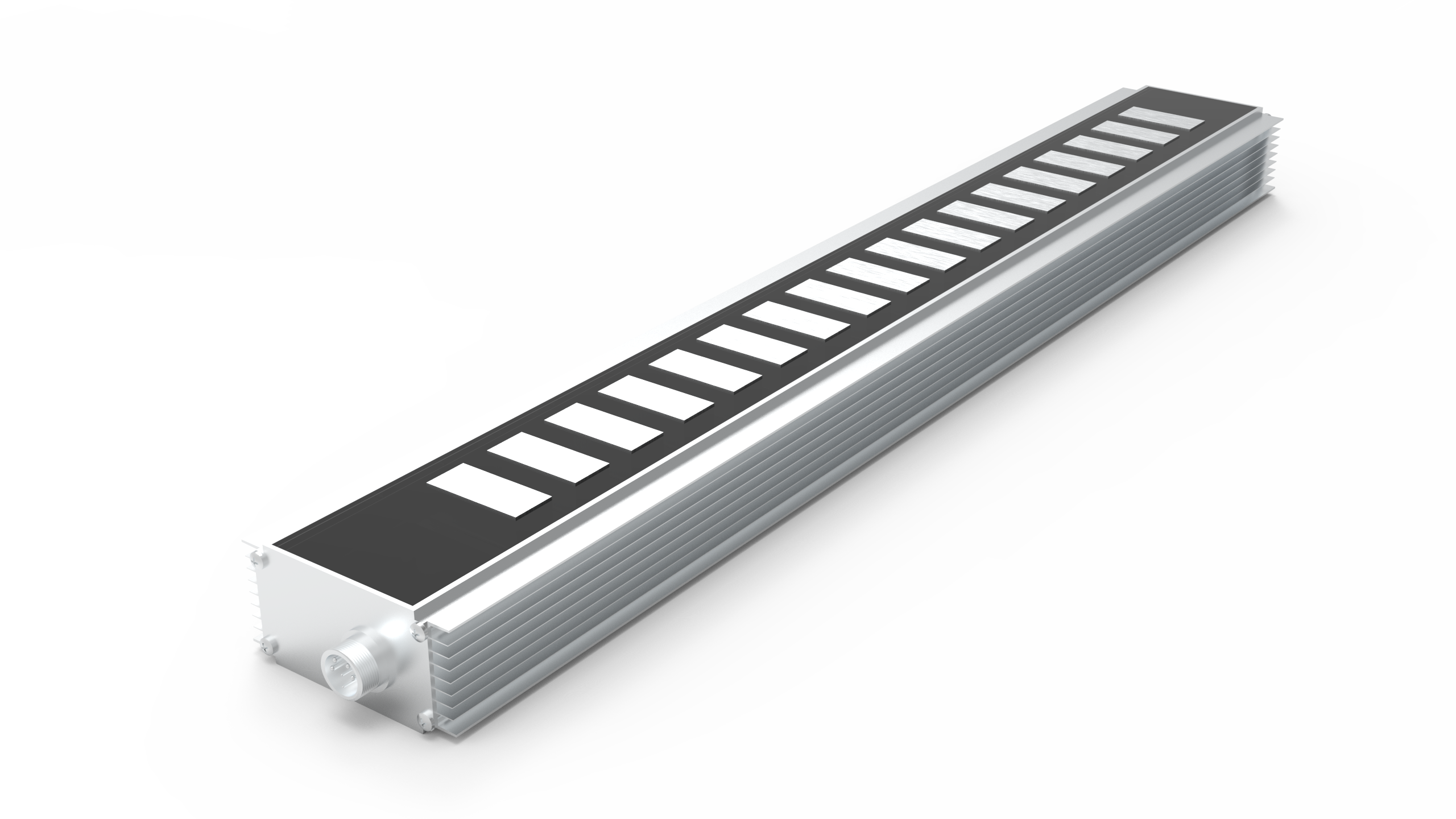
Direct payload coupling eliminates mechanical tolerance stack-up entirely. You no longer worry about gear mesh wear or belt degradation. The linear motors drive the sorting carriage directly along the track. This direct application of force removes intermediate mechanical slop completely. The payload moves exactly when the magnetic field shifts.
These direct-drive systems rely heavily on closed-loop feedback integration. Optical or magnetic linear encoders track exact payload positions continuously. They feed real-time micron-level data back to the servo drive. The controller adjusts current instantly to correct minute deviations. This synergy achieves micrometers of repeatability across extremely long travel spans.
Stiff control loops drastically improve dynamic settling time. Traditional mechanical actuators vibrate upon reaching a target position. This settling phase delays the next operational sequence. Direct-drive electromagnetic forces stabilize the sorting diverter almost instantly. High control loop stiffness stops the payload exactly on position. It holds the payload rigid against external forces.
These technical features deliver powerful commercial outcomes immediately. Operations experience drastically lower defect rates. Facilities achieve precise product spacing on fast-moving conveyors. High-density sorting lanes see far fewer rejected items. Engineers can place delicate micro-components securely without excessive mechanical jarring.
Best Practice: Always match your encoder resolution to your actual application needs. Buying sub-micron optical encoders for bulky parcel sorting wastes budget. Magnetic encoders often provide robust enough precision for general logistics.
Mechanical linkages naturally restrict continuous sorting speed. Ball screws suffer from critical speed limits based on their length. If rotated too fast, they experience dangerous screw whip. This vibration destroys bearings rapidly. Belts suffer from tensile stretch and snapping risks at high velocities. Non-contact electromagnetic motion overcomes these physical constraints entirely. Only the supply voltage and encoder limits restrict their top speed.
Acceleration capabilities represent the most critical operational upgrade. Multi-G acceleration handles short-stroke sorting operations perfectly. Top speed is rarely reached in tight sorting lanes before deceleration begins. The actuator must sprint and stop over distances of inches. High G-force capabilities shrink cycle times instantly in these scenarios.
Modern linear motors enable unprecedented multi-carrier flexibility. Independent movers travel continuously on a single magnetic track. You can program each mover asynchronously using advanced software. This drastically increases sorting line density. Operators sort, buffer, and divert items simultaneously on one track. One carrier can sprint while another waits securely in a buffer zone.
| System Type | Acceleration Capability | Speed Limitation | Multi-Carrier Support |
|---|---|---|---|
| Belt-Driven System | Low to Medium | Tensile stretch and slip limits | No (synchronous only) |
| Ball Screw System | Medium | Screw whip (critical speed) | No (single payload) |
| Direct-Drive Electromagnetic | Ultra-High (Multi-G) | Encoder and voltage limits | Yes (independent movers) |
The upfront capital expenditure presents a noticeable financial hurdle. These specialized direct-drive actuators and their paired servo drives cost more initially. Upgrading requires investment in high-resolution encoders and specialized magnetic tracks. Management often balks at the initial purchase order compared to simple pneumatic cylinders.
However, you gain a massive frictionless advantage post-installation. Removing physical contact eliminates exhaustive preventative maintenance schedules. Maintenance crews stop adjusting belt tension every month. You eliminate messy and complex lubrication routines entirely. Bearing replacements become a thing of the past. The coils glide silently over the magnets without physical friction.
Mean Time Between Failures (MTBF) skyrockets in direct-drive setups. Non-contact electromagnetic systems suffer practically zero mechanical wear. Their practical lifespan vastly outperforms high-wear mechanical counterparts. The electronic components usually outlast the mechanical chassis of the sorting machine.
Integrators must evaluate specific variables to model financial returns accurately. You compare the upfront cost against increased units-per-hour revenue. You must also factor in the precise financial value of avoided downtime. Calculate the hourly cost of a jammed mechanical sorting line. High-cycle environments usually recover the initial hardware premium very quickly through sheer uptime.
Common Mistake: Facilities often focus solely on the initial component invoice. They fail to calculate the labor savings derived from zero-maintenance operation over ten years.
Retrofitting a linear motor onto a weak machine frame invites catastrophic failure. The extreme acceleration forces require exceptionally stiff machine bases. Heavy frameworks prevent destructive resonance and vibration during high-speed reversals. If the frame flexes, the precision encoder readings become completely useless.
Thermal management demands careful engineering planning. Rotary motors often isolate heat away from the core process mechanically. In contrast, flat electromagnetic tracks dissipate heat directly into the machine bed. You must outline dedicated cooling requirements early in the design phase. High-thrust continuous applications typically necessitate dedicated chilled water cooling. Lower duty cycles might survive safely on ambient air cooling alone.
Magnetic attraction forces pose unique safety and structural challenges. Iron-core variants utilize incredibly strong permanent neodymium magnets. These exert massive attractive forces between the moving coil and the track. The machine frame must withstand thousands of Newtons of downward pulling force. This demands heavy-duty linear guides to maintain the critical air gap safely.
Cable management presents another major physical hurdle. Moving coils travel at extreme speeds over long strokes continuously. You must install high-flex cables and robust tracking solutions. Poorly designed cable carriers will snap under continuous multi-G acceleration cycles.
Selecting the right actuator type dictates your entire system success. You must categorize your specific application needs carefully. Iron-core configurations deliver exceptional high continuous force. They are ideal for pushing heavy parcels or bulky logistics trays. However, they experience slight cogging forces during precise movements.
Ironless variants offer absolutely zero cogging and operate incredibly smoothly. They utilize a U-shaped magnet track surrounding an epoxy-sealed coil. They suit lighter payloads and ultra-high precision micro-component sorting tasks. They accelerate faster but cannot push massive weights continuously.
Accurate sizing and payload verification prevent costly underperformance. You must calculate the moving mass precisely before ordering. Engineers evaluate the expected duty cycle alongside required peak and continuous thrust forces. Software sizing tools help simulate the exact motion profile accurately.
Drive and controls compatibility remains equally crucial for integration. The chosen hardware must integrate seamlessly with your existing industrial network protocols. Verify your motion controllers support EtherCAT, PROFINET, or Ethernet/IP natively. Mismatched communication protocols create frustrating programming delays.
To move forward securely, take actionable and data-driven next steps. Recommend initiating a limited Proof of Concept (PoC) on a single sorting lane. Request a detailed sizing report from a trusted motion control vendor before purchasing.
Direct-drive systems represent a strategic upgrade for operations bottlenecked by mechanical limits. Sorting systems simply cannot outpace the physical boundaries of belts and lead screws. As e-commerce and micro-manufacturing demand faster throughput, mechanical linkages become unacceptable liabilities.
While they demand precise engineering, the operational benefits remain undeniably clear. The incredible returns in accuracy, speed, and uptime dictate their necessity in modern automated facilities. The higher initial investment pays dividends through aggressive daily throughput gains. You eliminate structural wear while multiplying your units-per-hour metrics.
Audit your current cycle times and maintenance logs today. Build a data-driven baseline of your existing mechanical bottlenecks. Document exactly how much money mechanical wear costs your facility annually. Use these exact metrics to evaluate if a direct-drive upgrade aligns with your expansion goals.
A: Yes, but retrofits require significant machine frame reinforcement. High acceleration forces can tear weak legacy frames apart. You may also need to redesign the control architecture completely. For these reasons, deploying direct-drive technology is often more cost-effective during clean-sheet machine designs rather than retrofits.
A: They perform exceptionally well when properly rated. Many direct-drive coils feature high IP ratings through full epoxy encapsulation. The magnetic tracks naturally withstand harsh environments better than exposed ball screws. However, you must ensure your chosen linear encoders are suitably protected against dust or moisture blinding.
A: Power consumption depends heavily on the application's dynamic profile. Direct-drive systems lack the mechanical advantage of a gearbox, which can draw more current to hold heavy loads. However, eliminating mechanical friction balances the energy draw. In high-dynamic, continuous sorting applications, overall system efficiency frequently improves.


 English