
Views: 0 Author: Site Editor Publish Time: 2026-06-30 Origin: Site


High-speed sorting systems in logistics, e-commerce, and manufacturing currently hit severe physical throughput limits. Conventional rotary-to-linear drivetrains simply cannot handle modern sorting demands. Belts, pulleys, and ball screws struggle under rapid, continuous operation. These traditional mechanical linkages introduce damaging backlash and friction. They also cause compounding maintenance downtime as speed requirements scale upward. You lose valuable production time to mechanical wear. Upgrading to direct-drive technology eliminates these intermediate mechanical components entirely. This shift creates a much more reliable motion profile. Our article provides an objective, engineering-focused evaluation of permanent magnet linear motor technology. We detail exactly when the resulting performance gains justify the integration complexity and higher initial CapEx for sorting applications. You will discover how to evaluate system sizing, handle design trade-offs, and implement controls. We want to help you confidently transition your sorting infrastructure to direct-drive automation.
Modern fulfillment centers operate around the clock. They require systems capable of sorting thousands of items per hour. Traditional linear motion systems fail to maintain these metrics without constant intervention. You must understand their inherent physical limits to justify an upgrade.
Mechanical limitations plague conventional setups. Ball screws suffer from "screw whip" at high rotational speeds. When the screw turns too rapidly over long travel distances, it begins to vibrate violently. This phenomenon limits the critical speed of the entire sorting lane. Belt drives present a different challenge. Belts stretch over time under high dynamic loads. They experience resonance issues during rapid acceleration. These physical constraints severely restrict your maximum transfer velocities.
Maintenance overhead is another massive burden. Friction-based components wear down continuously in 24/7 environments. Bearings degrade. Belts fray and snap. Pulleys lose their alignment. Every mechanical linkage requires lubrication, tensioning, or eventual replacement. Replacing a snapped belt stops the entire sorting line. Unplanned downtime destroys facility productivity.
Positioning lag also creates a hidden ceiling on your items-per-minute (IPM) rate. Backlash occurs because mechanical gears and belts have slight gaps between mating parts. When the motor reverses direction, the system must take up this slack before the payload actually moves. Mechanical compliance adds to this delay. The system acts like a stiff spring. It takes milliseconds for the payload to stop vibrating after reaching its target. We call this settling time. These micro-delays accumulate rapidly. They cap the absolute limit of your sorting throughput.
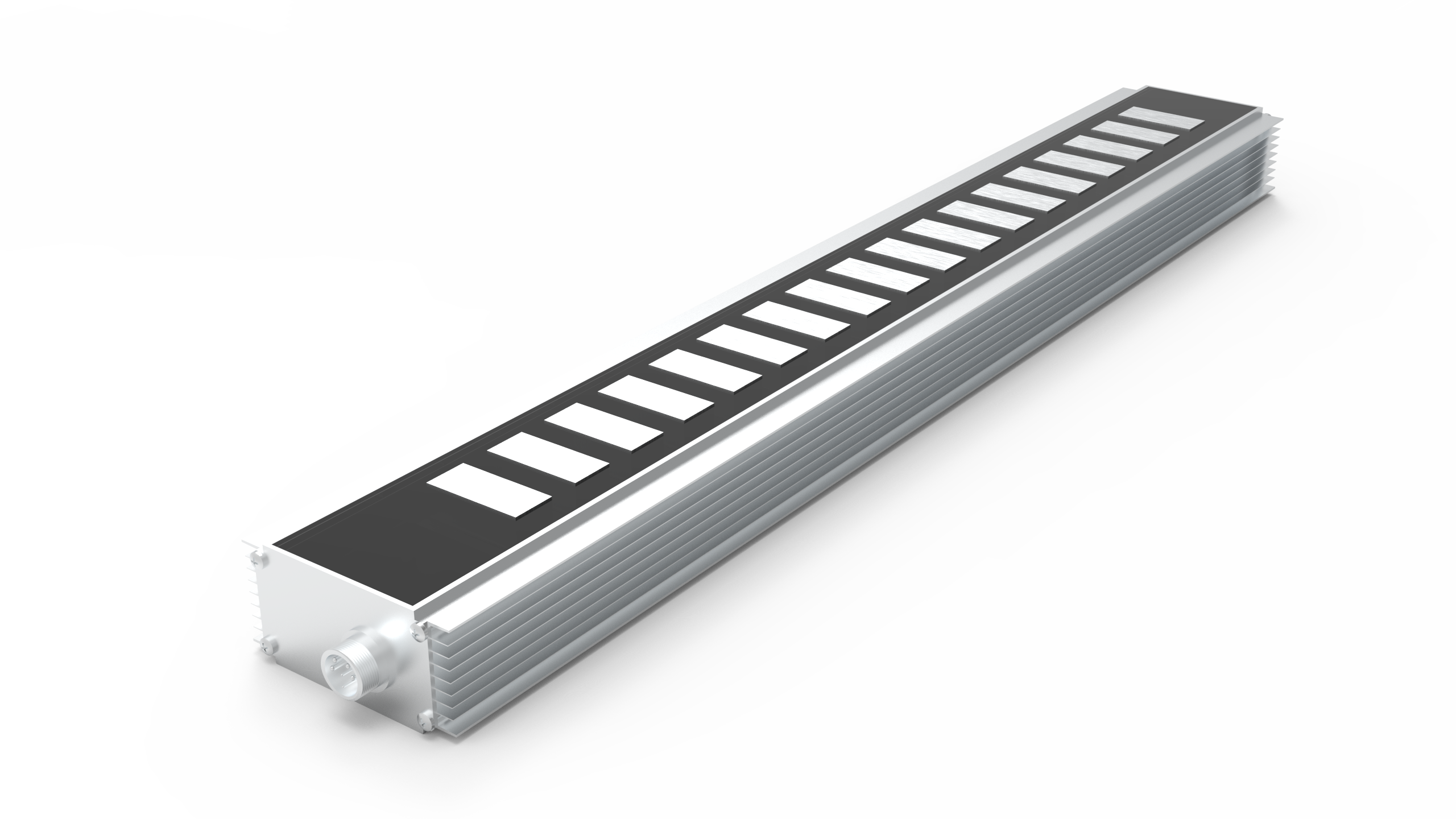
Direct-drive mechanisms fundamentally change the physics of automated sorting. They remove the gearbox. They remove the belts. They remove the ball screws. This architecture provides several distinct engineering advantages.
First, you achieve a direct translation of force. We experience zero backlash because there are no mating mechanical gears. The payload couples directly to the moving magnetic field. The motor instantly transfers electromagnetic thrust to the carriage. There is zero mechanical delay. When the controller commands a move, the parcel moves instantly.
Second, linear motors deliver extreme acceleration and velocity profiles. Traditional pneumatics act slowly due to air compression. Belt drives slip if you accelerate them too aggressively. In contrast, direct-drive solutions routinely exceed 5G acceleration rates. They achieve top speeds surpassing 10 meters per second. This rapid movement allows you to shrink the physical footprint of your divert zones.
Third, these systems offer micrometer-level positioning accuracy. High-speed sorting often requires dynamic diverting. A pusher must strike a parcel at an exact millisecond. Direct-drive mechanisms pair beautifully with high-resolution linear encoders. The controller knows the exact position of the carriage at all times. This precision guarantees flawless parcel tracking.
Finally, you benefit from massive mechanical wear reduction. The primary drive mechanism is entirely non-contact. The coil (forcer) hovers over the magnet track without touching it. This non-contact nature yields specific reliability benefits:
Despite their performance, direct-drive systems are not universal solutions. Integrating them requires careful engineering. You must evaluate several distinct drawbacks before committing to this technology.
High initial capital expenditure (CapEx) is the most obvious hurdle. These systems require heavy investments upfront. Rare-earth magnets line the entire length of the travel track. The longer the sorting conveyor, the more magnets you must purchase. Furthermore, precision linear encoders cost significantly more than standard rotary encoders. You pay a premium for this technology on day one.
Thermal management presents a serious engineering challenge. The primary coil generates immense heat during continuous operation. Heat increases the electrical resistance of the copper windings. If it gets too hot, the motor loses thrust efficiency. You must design adequate cooling paths.
Strong magnetic attraction forces complicate the mechanical design. Iron-core motors generate a massive attractive pull between the forcer and the magnet track. This force often exceeds the actual forward thrust of the motor. It pulls downward constantly. You cannot use flimsy structural frames. The system requires highly rigid, heavy-duty linear guide rails. These rails must support both the payload mass and this intense magnetic preload.
Environmental sensitivity also demands attention. Industrial sorting environments are often dirty. Exposed permanent magnets attract ambient ferrous debris. Steel dust, screws, or metal shavings will fly onto the magnet track. This debris destroys the narrow air gap between the motor and the track. You must implement proper shielding. Bellows, metal covers, and positive air pressure systems are necessary to protect the drive components.
Specifying the correct motor requires rigorous mathematical analysis. Guesswork leads to burned-out coils or stalled sorting lines. You must match the motor capabilities to your specific operational profile.
The payload mass versus acceleration matrix forms your baseline. You must calculate the required peak thrust. The formula relies on basic physics: Force equals mass times acceleration, plus applied friction. You must base this calculation on the absolute heaviest item in your sorting catalog. You then determine the shortest required transfer time. The motor must generate enough peak thrust to hit this acceleration target without exceeding its thermal limits.
You must differentiate between continuous and peak force requirements. Peak force represents the absolute maximum thrust the motor can generate for a short burst. Sorting diverters often use peak force to punch a heavy box off the line. Continuous force represents the thrust the motor can sustain indefinitely without overheating. High-duty-cycle transport relies entirely on continuous force. If your baseline motion profile demands more than the motor's continuous force rating, the system will eventually fail.
Choosing between iron-core and ironless designs dictates the motion quality. Both have distinct places in logistics automation.
| Design Feature | Iron-Core Architecture | Ironless (Slotless) Architecture |
|---|---|---|
| Magnetic Attraction | Extremely high downward pull | Zero downward magnetic attraction |
| Thrust Density | Excellent for heavy payloads | Lower overall thrust capacity |
| Motion Smoothness | Experiences cogging at low speeds | Zero cogging; perfectly smooth travel |
| Ideal Sorting Application | Heavy parcel and tote diverting | High-speed letter and lightweight polybag sorting |
Encoder integration dictates your control accuracy. You must evaluate the facility environment. Magnetic linear encoders withstand dust, dirt, and minor impacts easily. They are perfect for rugged logistics centers. Optical linear encoders offer superior resolution but are highly sensitive to dirt. A single speck of dust can blind an optical sensor. Choose optical encoders only if you can guarantee a clean operating environment.
Adding direct-drive systems to a facility requires more than just bolting parts together. You must consider the broader structural and electrical ecosystem. Implementation strategies differ wildly based on your starting point.
Retrofit feasibility varies compared to green-field builds. Retrofitting existing conveyors is notoriously difficult. Legacy conveyor frames often lack the structural rigidity required for direct-drive systems. When a motor accelerates at 5G, it imparts a massive reaction force into the machine frame. If the frame flexes, the system loses precision and stability. Retrofits usually require heavy steel reinforcements. Green-field builds are much easier. You can design the heavy-duty base structure from the ground up to handle intense dynamic loads.
Control system upgrades are strictly mandatory. Old programmable logic controllers (PLCs) cannot manage direct-drive dynamics. You need advanced servo drives. These drives must possess high-bandwidth current loop update rates. Because there is no mechanical damping in the system, the motor responds instantly to current changes. The servo controller must read the encoder and adjust the current thousands of times per second. If the update rate is too slow, the motor will vibrate uncontrollably.
Safety protocols require a complete overhaul. Maintenance crews are accustomed to unpowered belts being safe. However, exposed permanent magnets are always "on." They pose a severe hazard. They can pull tools from a technician's hand, causing extreme crush injuries. They also pose lethal risks to personnel with pacemakers. You must highlight these safety considerations during installation. Maintenance teams must use specialized non-magnetic tools. You must enforce strict lockout and shielding protocols before anyone approaches the magnet tracks.
Transitioning to direct-drive automation shifts high-speed sorting from a purely mechanical challenge to a sophisticated control-system challenge. You eliminate the physical bottlenecks of traditional belts and screws. In return, you unlock massive throughput potential previously thought impossible.
Your decision relies on evaluating your operational constraints. If your facility is currently bottlenecked by speed limits, poor positioning precision, or excessive downtime from broken belts, the operational economics favor the upgrade. The elimination of constant maintenance justifies the initial investment. Conversely, if your throughput demands remain relatively low and traditional drives meet your targets, conventional setups remain highly effective.
We encourage you to take practical next steps. Consult with an experienced application engineer. Provide them with your heaviest payload data and your target items-per-minute rate. Run a detailed motion profile simulation to verify the required thrust. By validating the engineering data upfront, you ensure a successful transition to high-speed automated sorting.
A: An AC induction motor pairs with gearboxes and belts to move payloads. It is highly cost-effective but suffers from mechanical wear, lower speeds, and poor precision. A direct-drive linear system connects the magnetic field directly to the payload. It delivers extreme speed and flawless precision, but requires a higher upfront investment.
A: Yes. They require advanced servo drives specifically capable of commutating linear motion. These drives need exceptionally high bandwidth and fast current loop update rates. They also require specific feedback integrations, such as Sin/Cos or absolute linear encoders, to manage the instant responsiveness of the direct-drive mechanism.
A: Yes, they can operate reliably in dirty environments if properly protected. You must install mechanical shielding, like bellows or hard covers, to prevent ferrous dust from accumulating on the magnetic tracks. You must also select ruggedized magnetic encoders with an IP65 or higher rating to prevent sensor blinding.
A: The return period varies based on facility volume. Facilities usually realize their return within 18 to 36 months. This rapid payback stems directly from massive increases in items-per-minute (IPM) throughput. It is also driven by completely eliminating the constant replacement costs of belts, pulleys, and gearboxes.


 English