
Views: 0 Author: Site Editor Publish Time: 2026-07-01 Origin: Site


Mechanical transmissions remain the absolute undisputed industry standard for general automation everywhere. You routinely see traditional ball screws and belt drives powering countless manufacturing floors globally. Engineers have relied on these highly reliable mechanisms for many decades.
However, modern manufacturing realities are shifting rapidly today. Increasing demands for sub-nanometer precision drastically expose the physical limits of these traditional mechanical linkages. Parts inevitably wear down over continuous, high-speed operation. They introduce unwanted friction and cause catastrophic downtime in highly dynamic applications.
Engineering teams recognize these physical bottlenecks immediately on the factory floor. They actively seek superior, completely frictionless alternatives to maintain competitive output rates. We present this article as a comprehensive, objective technical evaluation. We detail exactly why you might justify the transition to direct-drive systems. We explore the structural limitations of mechanical drives thoroughly. You will learn when upgrading to advanced motion technology makes practical sense for your specific engineering goals.
Engineers constantly battle the natural degradation of moving mechanical parts. Ball screws and belts inevitably degrade during continuous, high-cycle operations. This continuous wear leads directly to a gradual loss of precision. You must perform frequent, frustrating tuning just to maintain acceptable tolerances. Mechanics spend countless hours adjusting these aging systems. Eventually, the physical degradation becomes entirely unmanageable.
Mechanical play introduces significant technical challenges in highly dynamic applications. Systems requiring rapid directional changes suffer greatly from inherent backlash. These sudden shifts in direction cause immediate, unacceptable positioning errors. Consequently, manufacturers experience much higher rates of rejected yields. A small positioning error quickly ruins an entire batch of expensive semiconductor wafers. You cannot easily program away the physical reality of mechanical backlash. It remains a constant obstacle in precision engineering.
Routine maintenance schedules create massive hidden operational costs. You must constantly monitor critical lubrication levels across the factory. Technicians spend valuable time manually adjusting belt tensioning on complex machines. Component replacement halts active production lines entirely for hours. These necessary tasks act as persistent, unavoidable productivity bottlenecks. They drain maintenance resources and limit overall factory throughput significantly. Modern automated facilities simply cannot tolerate this frequent, planned downtime. They require motion systems capable of running flawlessly for years.
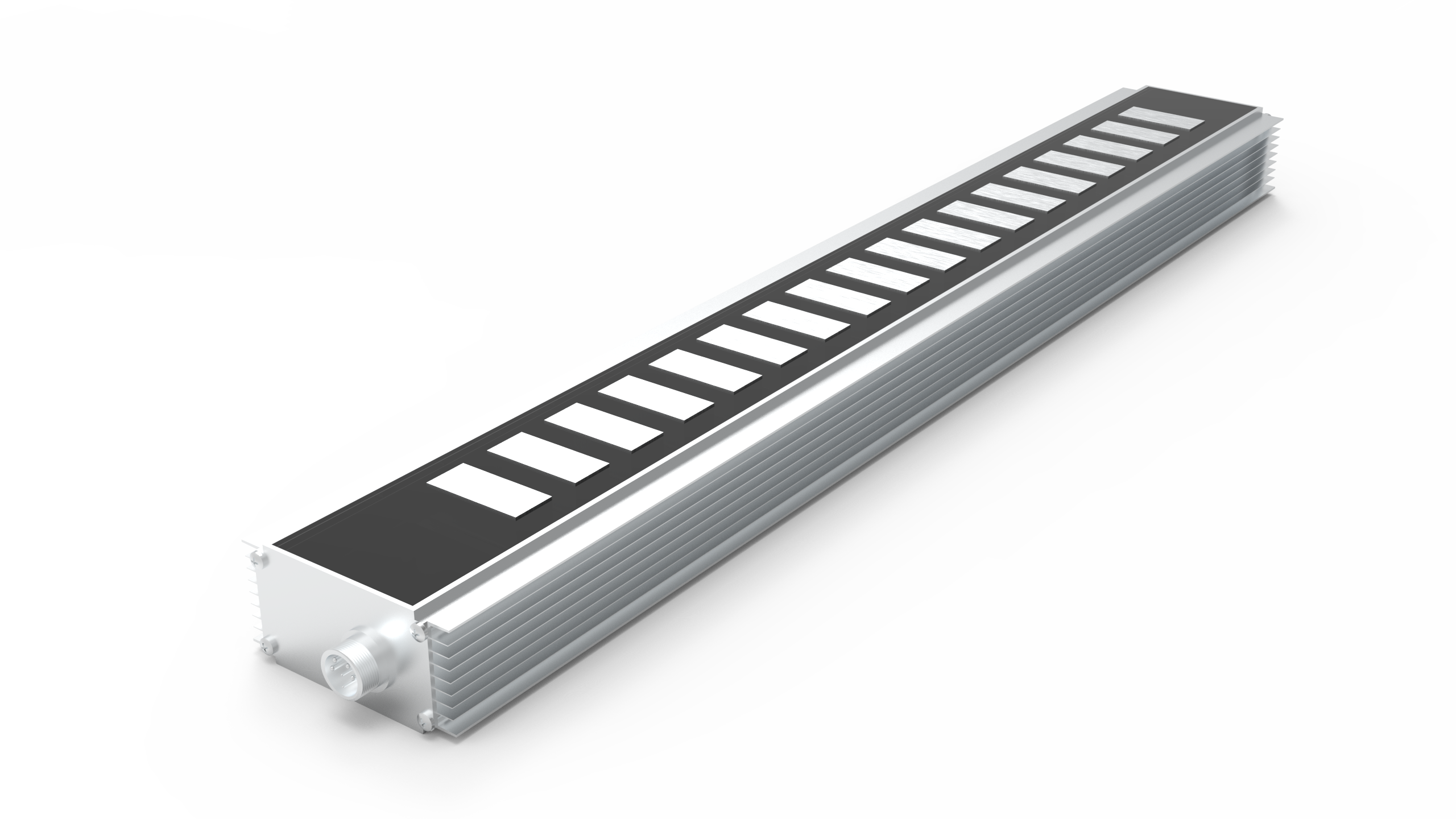
Let us define the direct drive principle simply and clearly. Imagine unrolling a standard rotary motor into a completely flat plane. You directly couple your payload to the moving electromagnetic field. This elegant design completely eliminates the need for rotary-to-linear conversion components. You strip away the cumbersome gearboxes and the complex coupling mechanisms. The payload responds immediately to the changing magnetic forces.
Power delivery becomes an entirely frictionless process. A distinct air gap exists permanently between the moving forcer coil and the stationary magnetic track. This microscopic gap removes all mechanical contact from the primary drive mechanism. It establishes a strong baseline for a theoretically infinite mechanical life. You eliminate the metal-on-metal grinding found in traditional screw drives. The system glides smoothly along the track without generating harmful friction.
Dynamic responsiveness improves dramatically under this direct-drive paradigm. Direct-drive systems consistently deliver near-instantaneous acceleration profiles. They also achieve significantly faster settling times during complex motion sequences. You benefit directly from much higher system stiffness and lower overall inertia. Integrating linear motors directly transforms machine agility on the factory floor. We frequently observe cycle times dropping by half after a successful retrofit. They handle rapid oscillation easily without straining the underlying machine architecture.
Modern manufacturing often requires true sub-micron positioning accuracy. Some advanced optical processes even demand strict nanometer-level control daily. Direct-drive technology completely eliminates the microscopic pitch errors found in mechanical systems. Even the absolute highest-grade ground ball screws suffer from these inherent inaccuracies. Thermal expansion inside a ball screw further degrades its positional accuracy. Direct coupling allows the high-resolution encoder to measure the payload position directly. You remove all the mechanical compliance hiding between the motor and the load. This direct feedback loop guarantees exceptional repeatability across millions of rapid cycles.
You must evaluate your required acceleration profiles carefully. Advanced direct-drive systems routinely achieve peak acceleration rates exceeding 5G. They easily sustain continuous travel speeds well greater than 5 meters per second. These incredible kinetic metrics directly increase your absolute machine output limits. Belt drives simply snap when subjected to these extreme dynamic forces. Ball screws overheat dangerously if pushed to similar rotational speeds. Moving to frictionless motion allows you to push the boundaries of physics. You maximize the throughput of every single square foot of factory space.
Cleanroom and high-vacuum environments demand extremely strict contamination control. Direct-drive mechanisms generate absolutely zero particulate matter during standard operation. They eliminate metal-on-metal wear entirely from the primary motion path. You never need to apply messy grease or contaminating liquid lubricants. This ultra-clean operation proves universally ideal for advanced semiconductor manufacturing. Medical device assembly lines also rely heavily on this clean technology. Eliminating lubricants prevents costly contamination events from ruining sensitive biological payloads. We see extensive adoption in modern pharmaceutical sorting facilities for this exact reason.
Heat presents a major, unavoidable engineering challenge here. Direct-drive systems completely lack a mechanical reduction to multiply holding force. They must draw continuous electrical current simply to maintain consistent thrust. This constant energy conversion transfers significant thermal energy directly into the moving payload. You must implement aggressive mitigation strategies to protect sensitive instruments. Engineers frequently install complex water cooling jackets around the primary coil block. They also utilize advanced thermal isolation mounts to separate the payload physically. Ignoring this thermal reality will quickly warp precision tooling. You must account for continuous heat generation during the initial design phase.
Sudden power-loss scenarios require incredibly careful safety planning. A traditional ball screw usually holds its vertical position during an electrical outage. In stark contrast, a direct-drive carriage will immediately drop its load freely. You lose all electromagnetic holding force the exact moment the facility power fails. Engineers must strictly install supplemental pneumatic brakes on all vertical axes. Passive magnetic braking systems also prevent catastrophic payload drops effectively. We cannot overstate the importance of these redundant safety catch mechanisms. Failing to secure a vertical axis will result in severely damaged tooling.
Machine assembly introduces highly unique workplace hazards for your technicians. Technicians handle bare, exceptionally strong magnetic tracks during the initial build phase. These powerful rare-earth components create severe pinch risks for exposed fingers. They strongly attract stray ferrous debris from across the entire assembly room. Furthermore, these intense magnetic fields can interfere dangerously with medical pacemakers. When installing linear motors,permanent magnet linear motor systems, worker safety remains absolutely paramount. You must establish dedicated, clean assembly zones devoid of loose steel tools. Proper training prevents painful injuries and protects the expensive magnetic tracks from impact damage.
You must intelligently choose the right motion technology for your specific application. Below is a detailed comparison chart highlighting key operational differences.
| Application Requirement | Mechanical Transmission | Direct Drive Systems |
|---|---|---|
| Primary Holding Force | Excellent (Passive holding capabilities) | Poor (Requires continuous active current or brakes) |
| Maximum Travel Speeds | Moderate (Highly limited by mechanical friction) | Extremely High (>5 meters per second) |
| Routine Maintenance Needs | High (Frequent lubrication, tensioning adjustments) | Very Low (Zero physical contact parts to wear) |
| Cleanroom Suitability | Low (Generates dangerous microscopic particulates) | High (No physical wear, no grease required) |
When to Stick with Mechanical Transmission:
When to Shortlist Linear Motors:
Next Steps for Engineers:
Replacing aging mechanical transmissions is definitely not a universal upgrade for every single machine. It serves uniquely as a highly targeted engineering solution. You implement this advanced technology specifically to overcome stubborn physics-based bottlenecks. It directly solves severe, costly limitations in maximum speed, dynamic precision, and ongoing maintenance.
You should always initiate a thorough thermal and kinetic profile analysis first. Make this critical analysis the very first step in your overall procurement process. Doing so ensures you successfully match the correct motion technology to your exact operational needs. Direct-drive solutions require careful initial integration, but they yield incredibly powerful manufacturing advantages long-term.
A: Typically, yes. They operate without the mechanical leverage of a screw pitch or a traditional gearbox. Generating continuous force requires a constant draw of continuous electrical current. This direct-drive requirement inevitably leads to higher baseline power consumption compared to standard mechanical actuators.
A: It is technically possible but rarely serves as a simple drop-in replacement. You must upgrade to high-resolution linear encoders. Technicians must structurally reinforce the machine frame to handle significantly higher dynamic loads. You also must ensure the controller actively supports direct-drive commutation protocols.
A: Because the primary motion mechanism is entirely frictionless, the theoretical mechanical life is infinite. In real-world applications, practical lifespan is usually dictated by the external linear guide bearings. The gradual degradation of the flexing power cables running to the moving coil also limits total longevity.


 English