
Views: 0 Author: Site Editor Publish Time: 2026-07-21 Origin: Site


High-speed automation and sub-micron precision requirements are exposing the mechanical limits of traditional rotary-to-linear drive systems. Ball screws, belts, and rack-and-pinion mechanisms increasingly struggle to keep pace in modern facilities. As industrial automation scales toward smart manufacturing, the demand for direct-drive technology has shifted dramatically. It is no longer just for niche semiconductor applications but now dominates mainstream manufacturing operations. Engineers and plant managers desperately need motion systems capable of handling rapid acceleration while maintaining absolute, unyielding precision over millions of cycles.
This guide details how direct-drive linear systems solve specific mechanical bottlenecks on the factory floor. You will discover where they provide the highest operational efficiency and how to practically evaluate them. We will also explore exactly how to determine if they are the right fit for your facility's specific manufacturing requirements. We will analyze the core technological differences and the implementation realities you must face during integration.
Traditional motion control relies heavily on rotary motors driving secondary mechanical actuators. Engineers often pair these conventional motors with ball screws, belt drives, or bulky gearboxes to translate rotational movement into linear motion. However, these chained systems introduce significant mechanical bottlenecks that cap ultimate machine performance. Friction inevitably slows down movement and generates unwanted heat. Transmission components exhibit elasticity under heavy loads, causing slight positional delays. Hysteresis creates microscopic positioning errors that compound rapidly over multiple high-speed cycles. Over time, physical degradation ruins repeatability, forcing maintenance teams to continuously recalibrate the machinery.
Direct-drive systems offer an elegant, inherently superior mechanical solution. Imagine taking a conventional rotary motor and slicing it open along its radial axis. If you unroll the stator and rotor flat, you create the fundamental electromagnetic foundation of modern direct-drive technology. This configuration generates linear force directly along a flat or tubular path. It completely bypasses mechanical transmission stages, meaning the motor applies thrust directly to the moving payload.
Engineers typically choose between several distinct structural variations when specifying linear motors. The core technology generally centers around the permanent magnet linear motor, which comes in three main topologies optimized for different industrial tasks:
Directly coupling the motor to the load radically changes modern automation capabilities. It allows for high-bandwidth, real-time servo control without any mechanical dampening interfering with the signal. This pure, direct feedback loop is essential for advanced Industry 4.0 data logging. Plant managers can easily implement highly accurate predictive maintenance strategies when monitoring unadulterated motor data, spotting microscopic performance anomalies before they trigger a catastrophic machine failure.
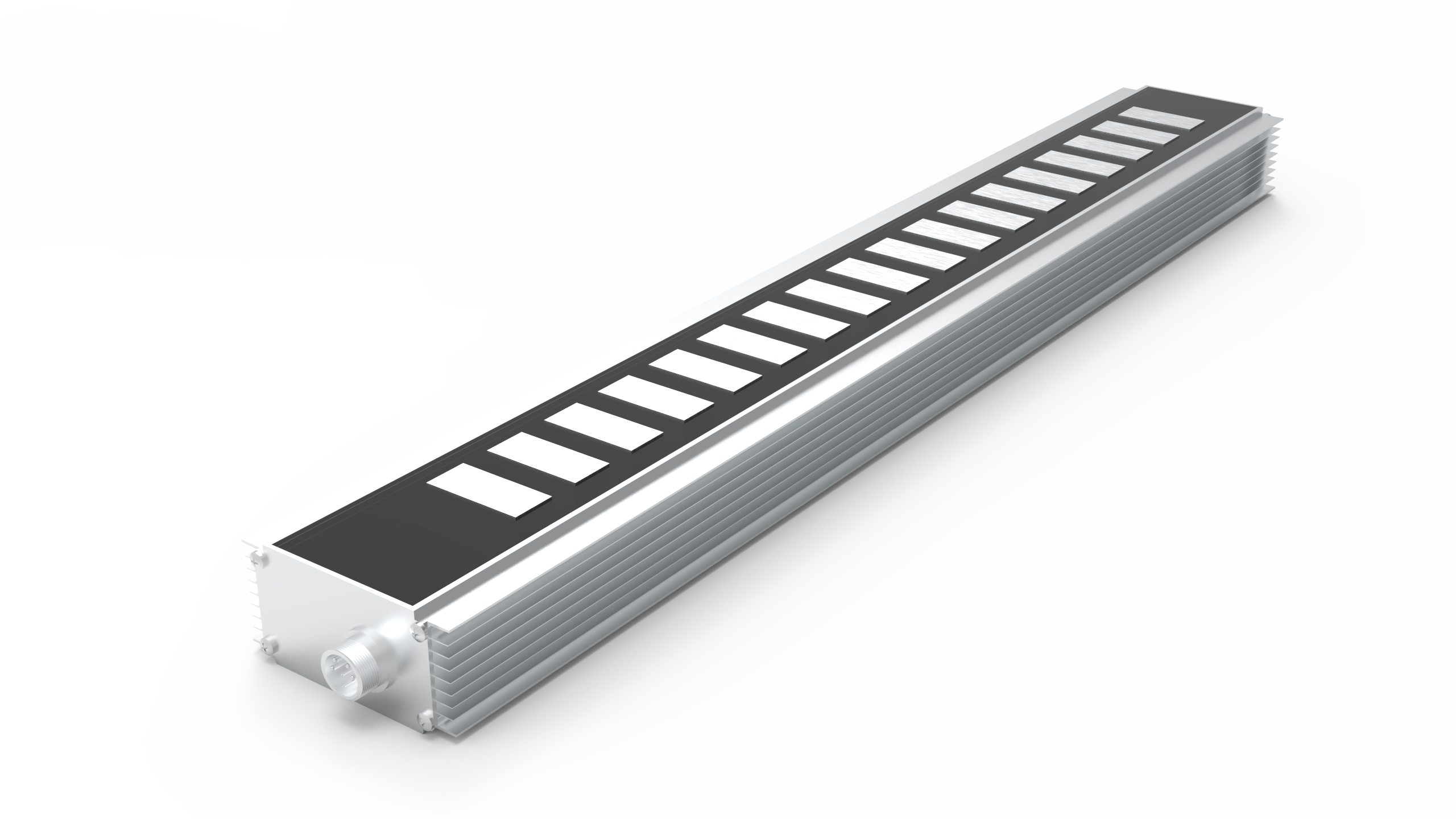
Yield loss remains a massive financial risk in wafer fabrication. Microscopic vibrations from rolling mechanical ball bearings routinely ruin delicate wafer features during photolithography. Furthermore, wearing mechanical parts generate airborne particulate contamination inside strict ISO-certified cleanrooms. Wafer scanning and structural inspection stages increasingly rely on ironless direct-drive systems to eliminate these environmental risks entirely. These specific setups deliver completely friction-free, zero-cogging movement. They guarantee absolute nanometer-level positioning stability without shedding a single particle of mechanical dust into the sterile environment.
Traditional fixed-pitch mechanical belts severely limit machine flexibility on modern packaging lines. Plant managers struggle to adapt legacy machinery when consumer product sizes change quickly or when running small-batch custom orders. Independent cart technology revolutionizes smart conveyance in these demanding environments. Multiple autonomous carriages operate smoothly on a single, continuous magnetic track. Operators can program each mover independently via software to adjust pitch, speed, and product grouping requirements instantly. This software-defined approach completely eliminates the mechanical retooling previously required for extensive product changeovers.
Mechanical backlash physically destroys edge quality during high-end machining. Rapid directional changes during laser cutting and precision CNC milling demand extreme mechanical stiffness. Even the tightest premium ball screws exhibit microscopic play when reversing direction rapidly. Ironcore models provide immense continuous force to overcome heavy tool drag. They maintain absolute rigid cutting precision even at extreme cornering speeds. Operators see remarkably cleaner cuts, drastically reduced secondary finishing requirements, and zero mechanical lag during complex multi-axis interpolation.
Medical device assembly requires sterile, highly repeatable motion across millions of consecutive cycles. Standard pneumatic cylinder systems risk venting compressed air contaminants, moisture, and fine oil mist directly into cleanroom environments. Tubular direct-drive units replace these traditional air cylinders perfectly. They eliminate biological and particulate contamination risks entirely because they require no compressed air infrastructure. Furthermore, they allow ultra-precise force control for delicate automated part pressing. Engineers can program exact force profiles to press fit fragile plastic medical components without cracking them, a feat virtually impossible with standard binary pneumatic cylinders.
Engineers and facility managers must evaluate the initial CapEx premium carefully when upgrading legacy machinery. Upfront hardware costs are undeniably higher than purchasing a standard rotary motor and ball screw combination. You must budget for the direct-drive mechanism itself, the necessary high-resolution linear encoders, and highly advanced servo drives capable of managing complex real-time control loops. However, focusing solely on the initial purchase price obscures the massive operational gains realized over the machine's functional lifespan.
Calculate the actual throughput improvements carefully based on your production bottlenecks. Direct-drive systems easily achieve explosive acceleration rates exceeding 5G. They routinely hit sustained velocities well above 5 meters per second. These blazing speeds slash individual cycle times drastically. Factories instantly increase their parts-per-minute (PPM) output, often allowing a single high-speed machine to do the work of two legacy mechanical systems.
Maintenance and uptime metrics shift highly favorably when you eliminate mechanical transmission components. These systems require absolutely zero lubrication. They contain no physical wearing parts between the moving carriage and the stationary track. This deliberate absence of mechanical friction reduces Mean Time To Repair (MTTR) metrics to near zero. You completely eliminate routine mechanical preventative maintenance downtime, keeping the production line running continuously across all shifts.
Consider energy efficiency realities carefully before deploying these systems. Removing mechanical friction naturally saves energy during continuous high-speed movement. However, heavy vertical payloads can trigger high resistive ($I^2R$) losses in ironcore models if the motor must constantly fight gravity. You must implement proper mechanical counterbalancing—such as pneumatic cylinders or magnetic springs—to prevent unnecessary power draw and excessive thermal buildup when holding heavy loads in place.
Below is a breakdown comparing operational metrics between traditional systems and direct-drive technology.
| Performance Metric | Traditional Rotary & Ball Screw | Direct-Drive Linear System |
|---|---|---|
| Peak Velocity | Low to Medium (Typically < 2 m/s) | Extreme (Often > 5 m/s) |
| Acceleration Limit | Capped strictly by screw whip and pitch | Exceptional (Regularly > 5G) |
| Mechanical Wear | High (Requires bearings, seals, lubrication) | Zero (Pure non-contact operation) |
| Positioning Accuracy | Degrades progressively over time due to backlash | Sustained, unchanging sub-micron repeatability |
| Maintenance Dependency | Requires scheduled greasing and belt tensioning | Virtually maintenance-free |
Specifying the right motion system requires strict engineering evaluation. You cannot simply drop a direct-drive unit into a machine designed for a rotary actuator. Follow these sequential evaluation criteria to guarantee successful integration and maximum hardware longevity:
Despite their overwhelming performance advantages, direct-drive systems introduce unique engineering hurdles. You must proactively address these specific physical risks during the initial mechanical design phase to prevent costly field failures.
Ironcore designs exert massive magnetic attraction forces completely independent of their driving thrust. The steel forcer pulls aggressively against the permanent magnet track, often generating thousands of Newtons of attractive force. This relentless downward attraction demands incredibly rigid, heavy-duty machine bases to prevent structural warping or linear bearing failure. Assembly technicians also require specialized, non-magnetic tooling and strict safety protocols to safely mount these highly magnetized components without severe pinching hazards.
Dynamic cable management strongly dictates long-term electrical reliability. Moving cables represent the absolute number one point of failure in dynamic motion setups. Because the motor moves physically with the load, power and data cables must flex continuously. You must use ultra-high-flex robotic-grade cables exclusively. Design your cable tracks meticulously to avoid tight bend radii, aggressive twisting, and internal cable friction.
System accuracy depends entirely on the chosen encoder technology. A direct-drive mechanism is genuinely only as precise as its electronic feedback loop. Optical linear encoders offer unparalleled nanometer resolution but fail quickly if dust, oil, or condensation coats the optical glass scale. Magnetic linear encoders survive harsh industrial conditions easily but often sacrifice ultimate resolution. Carefully weigh these hidden environmental costs and complex alignment sensitivities when choosing your feedback device.
Finally, plan extensively for sudden power loss scenarios. These frictionless systems lack the natural mechanical resistance of a high-ratio gearbox to stop the moving load. A sudden power failure sends the heavy carriage flying freely along the track via pure inertia. You must integrate secondary pneumatic mechanical brakes or specialized dynamic braking circuits within the servo drive. These mandatory safety mechanisms automatically clamp the load or short the motor phases to prevent catastrophic machine crashes during facility blackouts.
Direct-drive motion systems are not a blanket, universal replacement for all linear motion mechanisms on the factory floor. Instead, they represent a highly strategic, high-value mechanical upgrade designed for specific manufacturing bottlenecks. Forward-thinking facilities prioritize this technology when blazing speed, absolute unyielding precision, and maximum machine uptime directly dictate their overall operational profitability.
Engineering and corporate procurement teams should audit their current mechanical limits immediately. Walk the factory floor and ask your production managers exactly where cycle times hit hard physical caps. If traditional ball screw speed limits constantly throttle your output, a direct-drive transition makes immediate financial sense. If mechanical wear and backlash are causing unacceptable yield drops and quality control rejections, eliminating mechanical friction solves the root problem permanently.
Take decisive action by consulting closely with certified motion control specialists. Do not attempt to guess your sizing requirements. Request a custom sizing profile based on your exact payload weights, desired acceleration profiles, and dynamic duty cycles. Map out the projected operational efficiency gains to definitively justify the upfront engineering and hardware investment to your executive team.
A: A linear motor is the raw direct-drive electromagnetic mechanism itself. It consists purely of the magnet track and the coil assembly. A linear actuator is a complete packaged system. It often uses a traditional rotary motor turning a mechanical screw inside a housing, or it could integrate a tubular direct-drive mechanism. Actuators generally include built-in guides, bearings, and structural supports ready for immediate mounting.
A: Under normal operating temperatures, magnetic degradation remains practically negligible over a machine's lifespan. However, if the motor exceeds its strict thermal limits and severely overheats, the internal neodymium magnets can suffer irreversible demagnetization. Maintaining proper cooling protocols and respecting duty cycle limits prevents this permanent damage entirely.
A: Yes, but you must implement specific structural precautions. Ferrous metal dust is highly problematic because it actively attracts to exposed magnetic tracks, jamming the precision air gap. In these severe environments, you must specify fully enclosed tubular designs or install pressurized protective bellows over flat tracks to guarantee absolute reliability.
A: Without the mechanical damping, friction, or inertia matching provided by a standard gearbox or ball screw, the drive manages everything directly. The servo drive must handle highly dynamic, instantaneous real-time adjustments to manage load inertia and maintain positional stability. This requires significantly higher processing power, faster update rates, and highly tuned control loops.


 English