
Views: 0 Author: Site Editor Publish Time: 2026-07-07 Origin: Site


Sourcing motorized driven rollers (MDR) goes far beyond matching dimensions. It requires aligning your enterprise with a strategic partner. This partner must confidently support complex, automated material handling systems. Transitioning from pneumatic equipment to electric technologies shifts your focus. You are no longer just evaluating hardware. You must strictly evaluate the vendor. A poor choice in your manufacturing partner causes severe issues. It leads directly to integration bottlenecks and premature hardware failures. It also triggers cascading supply chain delays. Procurement and engineering teams must evaluate a motorized roller manufacturer across five dimensions. You need to verify their engineering depth and production scalability. You must also assess compliance, control interoperability, and lifecycle support. We will explore how to look past standard catalogs. You will learn to identify a highly capable automation partner.
Relying solely on standard product catalogs is a massive risk. Enterprise-grade warehouse automation requires robust solutions. Catalogs show basic physical dimensions and theoretical peak speeds. They rarely reveal how equipment performs under continuous loads. Automated facilities require highly dynamic components. Selecting a vendor based on static spec sheets often results in misaligned hardware. You might face unexpected downtime during high-throughput holiday seasons. Standard bearings might fail prematurely. Undersized motors could burn out.
Initial unit price savings frequently disappear quickly. Poor vendor communication easily erases upfront discounts. Inflexible product designs force expensive system workarounds. High replacement rates inflate maintenance budgets. Look deeply at the long-term lifecycle value instead. Hardware failures halt entire warehouse operations. Delayed shipments disrupt precise commissioning schedules. Therefore, evaluating your supplier involves measuring their responsiveness. You must gauge their ability to deliver consistent quality across multiple production runs.
What does a successful partnership actually look like? It starts with consistent lead times. It requires reliable batch-to-batch quality over years. You should also expect accessible engineering support during active system commissioning. The right partner anticipates complex integration hurdles before they occur. They provide transparent testing data freely. They ensure your logistics systems remain online and highly efficient over many years.
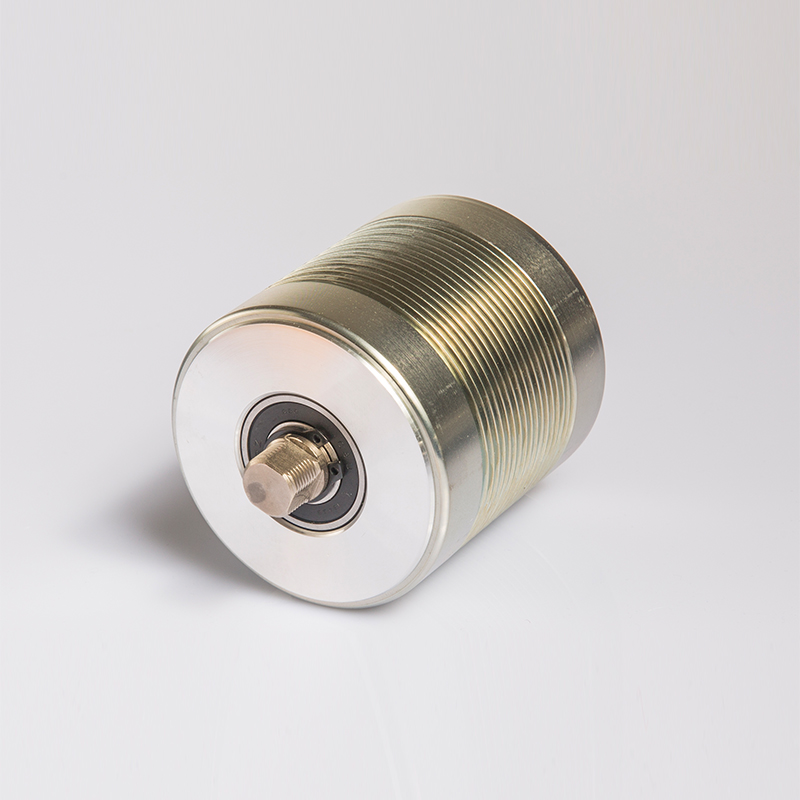
Standard 50mm rollers cannot handle every single automation scenario. Modern logistics centers process highly diverse materials daily. A capable manufacturer must provide payload and torque flexibility. They should offer varying gear ratios within standard dimensions. You might need to move lightweight polybags on one line. You might need to move heavy pallets on another. High-torque drives ensure heavy loads accelerate smoothly without stalling. High-speed options handle rapid parcel sorting efficiently. You need a partner offering broad mechanical flexibility. This flexibility meets varied operational demands.
Environmental adaptability is equally important. Facilities operate under diverse and harsh conditions. Warehouses can be dusty, wet, or freezing cold. A competent supplier manufactures motorized rollers featuring specific Ingress Protection (IP) ratings. Standard logistics centers typically require basic IP54 protection. However, washdown environments demand rigorous IP66 or IP67 ratings. Cold storage applications require special low-temperature lubrication. They need customized seals. These components must withstand extreme temperature fluctuations without internal condensation forming.
Surface and material options also dictate system performance. Diverse finishes cater to different friction requirements. Galvanized steel serves as a reliable standard for dry goods. Stainless steel provides necessary corrosion resistance for food sectors. Polyurethane (PU) coating increases surface grip for steep inclines. Grooved options facilitate precise O-band driving configurations. Having access to these variations ensures your conveyors handle specific products securely. The manufacturer should customize these finishes rapidly.
Mechanical durability only solves half the automation equation. A tier-one manufacturer must offer intelligent drive cards. These controllers must interface seamlessly into major industrial networks. Agnostic integration prevents costly and frustrating software workarounds. Your hardware should communicate naturally via Ethernet/IP, PROFINET, or EtherCAT protocols. This compatibility allows integrators to link conveyor zones directly. You can use standard PLC brands without custom gateways. Open-protocol architecture empowers your team. You can upgrade facility controllers without replacing entire mechanical systems.
Decentralized control options significantly reduce programming burdens. Evaluate capabilities like onboard Zero Pressure Accumulation (ZPA) logic. Onboard ZPA logic manages zone-to-zone communication automatically. Parcels move smoothly down the line without colliding. System integrators save hundreds of hours using this feature. They avoid writing complex item tracking code from scratch. The local drive cards handle the micro-level logistics directly. Your main PLC focuses entirely on macro-level routing.
Diagnostic transparency determines your maintenance efficiency. Intelligent control cards monitor real-time health data continuously. Maintenance teams need instant access to crucial telemetry. They must monitor current draw, internal temperature, and specific error codes. Predictive maintenance relies entirely on this detailed telemetry. A sudden spike in current draw indicates a problem. It often points to a failing bearing or a jammed belt. Capturing these alerts early prevents catastrophic line stops. When a supplier provides clear diagnostic interfaces, they actively protect uptime.
Supply chain resilience separates basic suppliers from strategic partners. Disruptions occur frequently in global manufacturing markets. You must ask how your vendor handles peak demand spikes. Do they maintain local safety stock for critical components? Clear communication regarding minimum order quantities (MOQs) is essential. Transparent lead times allow project managers to sequence installation precisely. When a supplier scales production rapidly, your deployment avoids costly delays. They act as a buffer against market volatility.
Rigorous in-house testing guarantees long-term durability. Quality cannot be assumed lightly; it must be proven. Required factory acceptance tests should include extensive fatigue testing. The manufacturer must test units under maximum payload capacities. Thermal load testing verifies the motors survive continuous operation. They must not overheat during peak shifts. Acoustic and noise level benchmarking is also necessary. It ensures the equipment meets modern occupational safety standards. A reputable vendor documents these tests meticulously. They gladly share validation reports upon request.
Batch consistency relies on strict quality standard certifications. Verifiable ISO 9001 manufacturing processes are non-negotiable today. Certifications prove the facility operates under standardized procedures. Every unit shipped today must match previous units perfectly. Inconsistent manufacturing tolerances lead to erratic conveyor speeds. They also create unpredictable maintenance schedules. Documented quality assurance protocols protect your initial investment. They shield your operations from hidden manufacturing defects.
Global regulatory standards matter deeply for multinational integrators. Ensure your partner provides verifiable CE, UL, and RoHS compliance. Multinational systems face varied electrical and safety codes. Non-compliant hardware risks failed facility inspections. It also forces expensive physical retrofits. A proactive manufacturer tests their equipment against international safety directives. They complete this testing before launching new product lines. This foresight protects integrators from legal and regulatory liabilities globally.
Pre-sales engineering support defines successful implementation realities. The vendor should provide immediate access to detailed 3D CAD models. System sizing calculators help engineers select appropriate gear ratios instantly. Pilot-testing programs allow your team to validate assumptions safely. You can test in a highly controlled environment. When manufacturers share their engineering expertise openly, they reduce friction. They solve problems during the critical design phase. Your project moves from concept to commissioning much faster.
Post-deployment realities hinge on warranty and RMA mechanics. You must assess the clarity of their warranty terms upfront. How efficient is their Return Merchandise Authorization (RMA) process? Evaluate the availability of domestic versus overseas technical support. When a zone goes down at 2 AM, time matters. Waiting 24 hours due to a time-zone difference is unacceptable. Responsive, accessible support minimizes facility downtime. It keeps your supply chain moving smoothly.
Selecting the ideal automation partner requires a structured approach. Use this framework to evaluate your shortlist effectively. You must move past basic price comparisons.
Step 1 involves the initial Pilot Request. Never commit to volume orders based solely on glossy brochures. Require sample units and drive cards for in-house testing. Run these components on your own custom test loops. Verify their claims regarding speed, torque, and noise levels. Integration testing proves whether their control cards communicate smoothly. You must test them against your specific PLCs.
Step 2 focuses on a Technical Documentation Audit. Evaluate the depth and accuracy of their installation manuals. Translation quality matters immensely for global products. Poorly translated API or protocol documentation causes massive integration headaches. Clear wiring diagrams and troubleshooting guides indicate a mature organization. If their documentation is robust, their engineering support likely follows suit.
Step 3 relies on a Vendor Assessment Matrix. Decision-makers need a concise way to compare options objectively. Weight the criteria based heavily on your long-term project goals. A standard benchmark assigns 40% to technical fit. Assign 30% to lead time and production scalability. Give 20% to accessible technical support. Limit initial unit cost considerations to 10%.
Below is a concise assessment template. You can use it to score potential vendors objectively.
| Evaluation Dimension | Weight (%) | Key Metrics to Assess | Minimum Acceptable Standard |
|---|---|---|---|
| Technical Fit & Engineering | 40% | Payload limits, torque, IP ratings, control protocols | Proves ZPA logic and EtherCAT/PROFINET compatibility |
| Scalability & Supply Chain | 30% | Lead times, MOQs, surge capacity, local stock | Transparent timeline documentation and verifiable ISO 9001 |
| Lifecycle Support | 20% | RMA process speed, diagnostic tools, warranty length | Domestic technical support and 48-hour RMA response |
| Financial & Commercial | 10% | Unit price, volume discounts, payment terms | Clear pricing structures without hidden firmware fees |
When applying this evaluation framework, keep several best practices in mind. These strategies prevent common procurement mistakes:
Motorized rollers act as the true heartbeat of modern conveyors. Your chosen manufacturer must function as a dedicated technical partner. They cannot merely act as a transactional hardware supplier. Operational success requires durable mechanical components. It also requires seamless industrial communication.
Evaluating production testing capabilities upfront remains crucial. Assessing control interoperability early is equally important. Doing so mitigates costly commissioning delays later in your project timeline. A rigorous vendor vetting process protects your facility. It prevents unexpected downtime and lost revenue.
Take proactive steps today to secure your supply chain. Initiate conversations with potential partners immediately. Request detailed technical whitepapers to review their engineering approaches. Ask for specific 3D CAD files to test within your layouts. Order a sample evaluation kit to begin internal hardware testing.
A: Standard lead times typically range from 4 to 12 weeks. This timeframe depends heavily on required customization, specific surface coatings, and current global supply chain conditions. Transparent vendors provide accurate schedules before purchase orders are signed.
A: It should not. Proprietary closed systems limit your flexibility. A top-tier manufacturer offers open-protocol compatibility. Their drive cards integrate natively with standard industrial networks like PROFINET, EtherCAT, and Ethernet/IP, ensuring agnostic integration.
A: Reputable suppliers utilize accelerated life testing. They run rollers continuously under maximum payloads and extreme thermal conditions to simulate years of wear. Buyers should always ask to review these specific factory testing documents.
A: Yes, retrofitting is physically possible. However, it requires specific mounting brackets to secure the new units properly. You also need careful power supply planning and dedicated cable routing to ensure safe, compliant operation.


 English